
Tax planning is crucial for startups and founders to optimize cash flow, reduce liabilities, and reinvest profits for growth. India offers several tax benefits, deductions, and exemptions to support startups.
These benefits are governed under the Income Tax Act, 1961 and startup-specific provisions under DPIIT recognition.
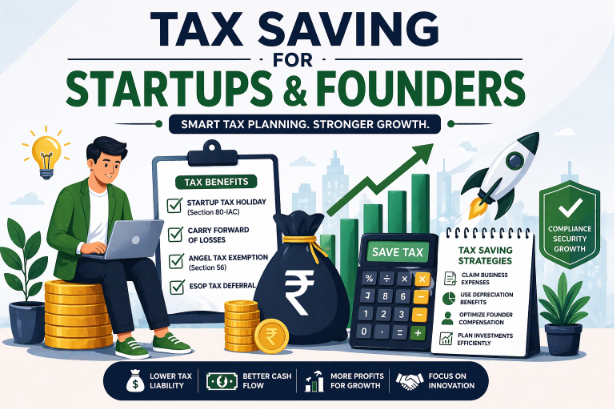
Why Tax Planning is Important for Startups?
Effective tax planning helps:
- Reduce tax burden
- Improve cash flow
- Maximize reinvestment
- Ensure legal compliance
Key Tax Benefits for Startups
Section 80-IAC (Startup Tax Holiday)
- 100% tax exemption on profits for 3 consecutive years out of 10 years
- Applicable to eligible DPIIT-recognized startups
Carry Forward of Losses
- Startups can carry forward losses even with changes in shareholding (subject to conditions)
Angel Tax Exemption
- DPIIT-recognized startups can claim exemption from angel tax under Section 56
ESOP Tax Deferral
- Eligible startups can defer ESOP tax liability
Common Tax Saving Strategies
- Claim all eligible business expenses
- Use depreciation benefits
- Structure founder salary vs dividends
- Optimize GST input tax credit
- Plan investments efficiently
Deductions Available
- Business expenses (rent, salaries, software, etc.)
- R&D expenses
- Depreciation on assets
- Professional fees
Step-by-Step Tax Saving Approach
Step 1: Get DPIIT Recognition
Register startup under DPIIT to avail tax benefits.
Step 2: Choose Right Business Structure
Select Pvt Ltd, LLP, or other structure based on tax efficiency.
Step 3: Maintain Proper Accounting
Keep accurate financial records and documentation.
Step 4: Claim Eligible Deductions
Identify and claim all allowable expenses.
Step 5: Plan ESOP & Founder Compensation
Optimize salary, ESOPs, and dividends for tax efficiency.
Step 6: Utilize Tax Exemptions
Apply for Section 80-IAC and other exemptions.
Step 7: File Returns on Time
Ensure timely filing to avoid penalties and retain benefits.
Benefits of Tax Planning
- Lower tax liability
- Better financial management
- Increased profitability
- Investor confidence
Advantages
- Supports startup growth
- Improves valuation
- Enables better cash utilization
- Reduces compliance risks
Risks of Poor Tax Planning
- Higher taxes
- Penalties and notices
- Cash flow issues
- Compliance problems
Conclusion
Tax saving is not just about reducing liability—it’s about strategic financial planning. Startups and founders should leverage available exemptions, deductions, and government benefits to maximize growth.
Proper tax planning ensures sustainability, compliance, and long-term success.