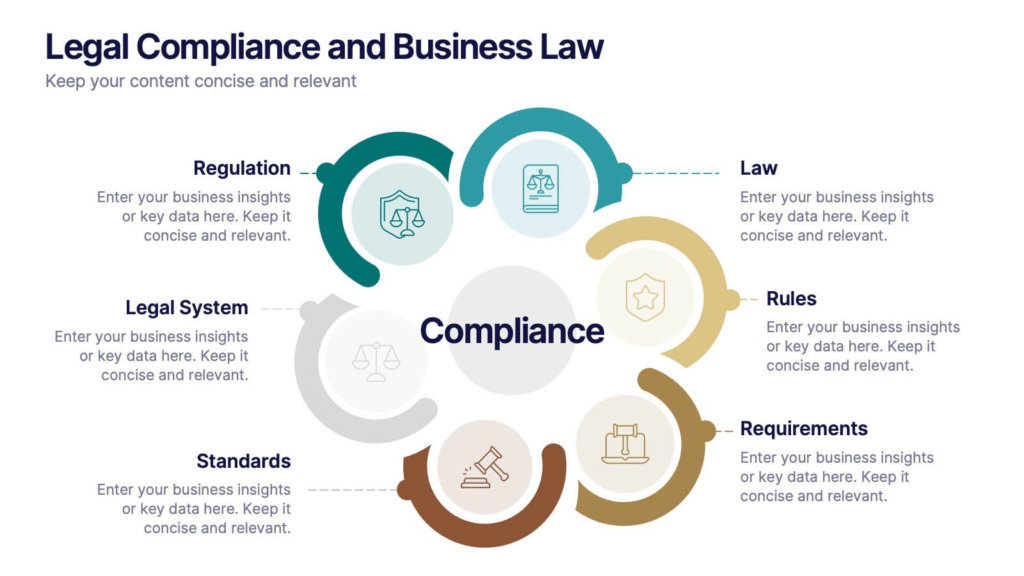
In today’s competitive world, compliance is no longer optional — it is essential.
Compliance means following the laws, regulations, and ethical standards that govern how a business operates.
When a company has strong compliance systems, it protects itself from legal risks, financial penalties, and operational disruptions.
A well-structured compliance framework helps businesses operate smoothly, build trust with customers, and maintain a strong reputation in the market.
⭐ What Is Compliance?
Compliance refers to a company’s responsibility to:
- Follow government laws
- Meet industry regulations
- Maintain proper documentation
- Ensure employee safety and fairness
- Follow ethical business practices
In simple terms:
Compliance keeps a business legally safe and professionally trustworthy.
⭐ Why Compliance Is Important for Every Business
✔ 1. Prevents Legal Trouble
Non-compliance can lead to fines, penalties, lawsuits, or even business shutdowns.
A strong legal system helps avoid these risks.
✔ 2. Builds Customer Trust
Customers choose companies that follow rules, protect data, and operate ethically.
✔ 3. Improves Business Efficiency
Well-defined processes reduce confusion, errors, and delays in operations.
✔ 4. Protects Employees
Compliance ensures fair wages, safe environments, and workplace rights.
✔ 5. Enhances Reputation
A compliant business looks reliable, professional, and credible — attracting investors and partners.
✔ 6. Helps in Long-Term Stability
Businesses with strong compliance systems grow steadily and avoid unnecessary risks.
⭐ Key Areas of Compliance for Businesses
🔹 1. Financial Compliance
Proper accounting, tax filing, GST, audits, and maintaining accurate financial records.
🔹 2. Legal Compliance
Registrations, licenses, contracts, corporate legal requirements.
🔹 3. Employment Compliance
Employee rights, minimum wages, safety laws, anti-discrimination policies.
🔹 4. Data Protection & Privacy
Safeguarding customer information and following data protection laws like GDPR or Indian DPDP Act.
🔹 5. Industry-Specific Regulations
Different industries (IT, healthcare, finance, manufacturing) have special rules businesses must follow.
⭐ How Businesses Can Strengthen Their Compliance Systems
- Conduct regular internal audits
- Create clear policies and documentation
- Train employees on legal and ethical standards
- Maintain proper records
- Stay updated with changing laws
- Use compliance management tools
A strong compliance system requires both knowledge and consistent implementation.