
Introduction
Social Security Code Compliance for Indian Employers has become increasingly important as India moves toward a consolidated labour-law framework. The Code on Social Security, 2020 came into force from 21 November 2025, replacing and consolidating provisions from several earlier social-security laws.
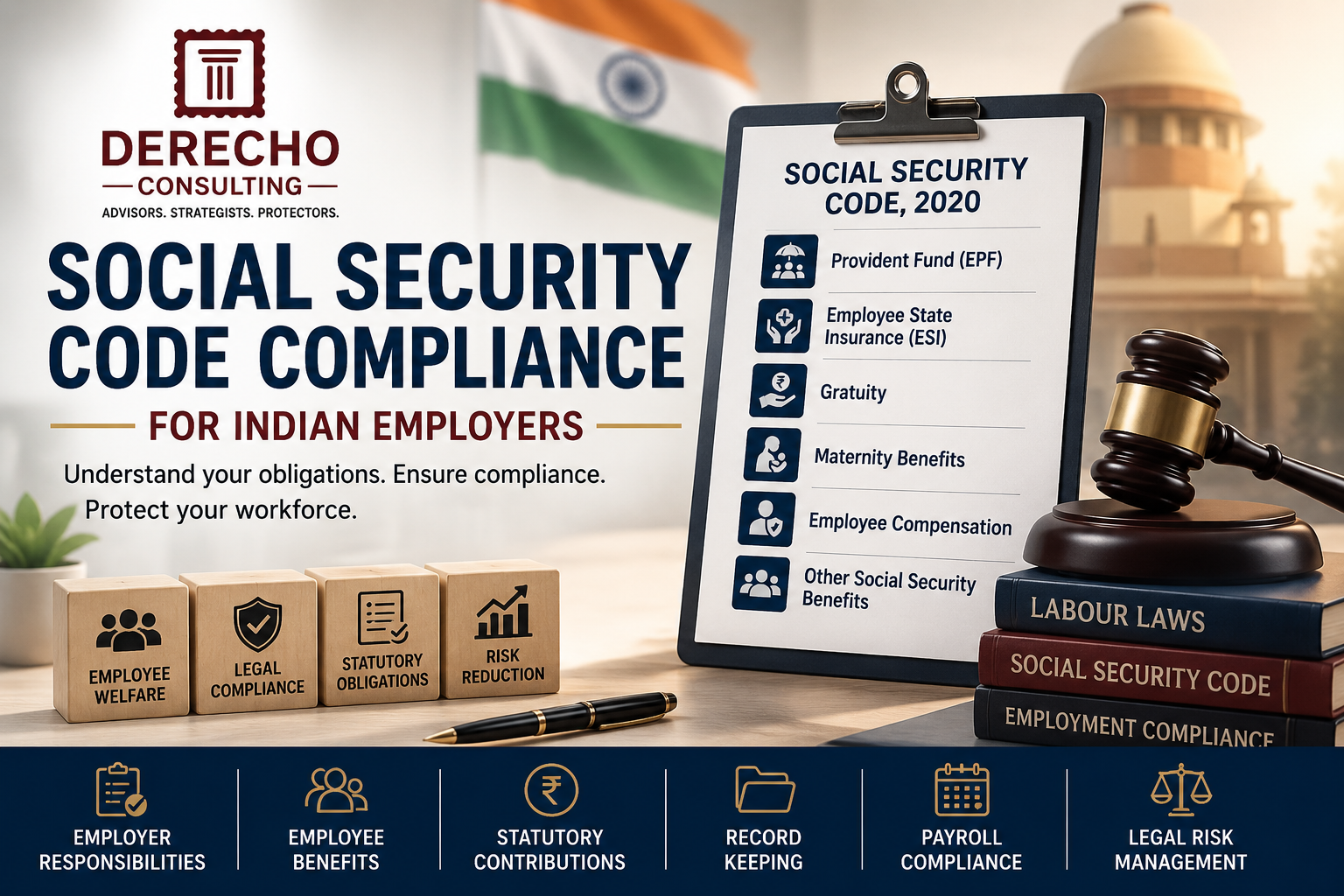
The Code covers important areas such as Employees’ Provident Fund (EPF), Employees’ State Insurance (ESI), gratuity, maternity benefits, employee compensation, and social security for unorganised, gig, and platform workers.
For employers, understanding the new framework is essential for maintaining payroll compliance, employee benefits, statutory contributions, records, and reporting requirements. A structured approach to Social Security Code Compliance can help businesses reduce legal risks and strengthen workplace governance.
Why Social Security Code Compliance Matters
Social-security obligations directly affect employees as well as an organisation’s legal and financial responsibilities. Non-compliance can result in financial exposure, regulatory action, disputes, and reputational risks.
Effective Social Security Code Compliance for Indian Employers can help businesses:
- Identify applicable social-security obligations.
- Maintain accurate employee and payroll records.
- Manage EPF and ESI requirements.
- Review gratuity and maternity-benefit obligations.
- Strengthen statutory contribution processes.
- Understand coverage requirements.
- Reduce compliance-related disputes.
- Improve employee welfare and corporate governance.
Key Areas of Social Security Code Compliance
1. Employees’ Provident Fund Compliance
The Code provides for EPF-related schemes and applies to establishments meeting the applicable coverage criteria. The Ministry of Labour’s employer handbook states that EPF provisions apply to establishments employing 20 or more employees.
Employers should review:
- Employee eligibility.
- Employer contributions.
- Employee contributions.
- Payroll calculations.
- EPF records.
- Statutory filings and payments.
2. Employees’ State Insurance Compliance
Employers should assess whether their establishments and employees fall within the applicable ESI framework.
Businesses should maintain appropriate systems for:
- Employee registration.
- Contribution calculations.
- Timely payments.
- Employee records.
- ESI-related reporting.
- Benefit administration.
The Government has highlighted expanded social-security coverage under the Code, including ESI provisions and coverage for establishments and workers subject to the applicable requirements.
3. Gratuity Compliance
Employers should review their gratuity obligations and ensure that employee records, service periods, and applicable payments are properly maintained.
Companies should establish appropriate procedures for:
- Identifying eligible employees.
- Maintaining service records.
- Calculating gratuity.
- Processing eligible claims.
- Maintaining supporting documentation.
4. Maternity Benefit Compliance
Social-security compliance also involves applicable maternity-benefit protections.
Employers should ensure that their policies and internal processes appropriately address:
- Maternity benefits.
- Employee eligibility.
- Leave administration.
- Required payments.
- Employee records.
- Statutory requirements.
5. Employee Compensation
Employers should understand their responsibilities relating to employee compensation in circumstances covered by the applicable provisions of the Code.
Proper workplace records, employment documentation, and incident reporting procedures can help organisations manage these obligations effectively.
6. Social Security for Gig and Platform Workers
One significant development under the Code is the recognition of gig workers and platform workers within India’s social-security framework.
The Government has highlighted provisions relating to unorganised workers, gig workers, and platform workers, including the creation of relevant definitions and social-security mechanisms.
Businesses operating platform-based or technology-enabled models should therefore monitor how these provisions apply to their workforce and business structure.
7. Maintaining Social Security Records
Accurate records are an important part of Social Security Code Compliance.
Employers should maintain relevant information relating to:
- Employee details.
- Wages.
- Contributions.
- Benefits.
- Employment periods.
- Statutory payments.
- Claims and supporting documents.
- Applicable registrations and filings.
Proper record management can help organisations demonstrate compliance during audits, inspections, or disputes.
Common Compliance Risks for Indian Employers
Employers may face risks because of:
- Incorrect employee classification.
- Incorrect contribution calculations.
- Delayed statutory payments.
- Incomplete employee records.
- Failure to identify applicable coverage.
- Payroll compliance errors.
- Incorrect treatment of benefits.
- Inadequate documentation.
- Failure to monitor regulatory changes.
- Lack of internal compliance controls.
Best Practices for Social Security Code Compliance
Indian employers should consider the following practices:
- Review their current workforce structure.
- Identify applicable social-security provisions.
- Audit EPF and ESI compliance.
- Review payroll calculations.
- Maintain accurate employee records.
- Review gratuity and maternity-benefit processes.
- Establish statutory payment calendars.
- Conduct periodic compliance audits.
- Update employment policies where required.
- Monitor notifications, rules, and regulatory developments.
2026 Compliance Considerations
The topic is particularly relevant in 2026 because the Code on Social Security, 2020 is now part of India’s implemented labour-code framework. The Ministry of Labour states that the four Labour Codes came into force from 21 November 2025, while its 2026 materials include employer guidance and FAQs concerning the Social Security Code.
Employers should therefore review their existing payroll, employee-benefit, documentation, registration, contribution, and reporting processes against the applicable requirements of the new framework and relevant rules.
The Ministry has also published the Social Security (Central) Rules, 2026 materials and related notifications, making ongoing regulatory monitoring important for employers.
How Derecho Consulting Can Help
Derecho Consulting can support businesses with labour-law and social-security compliance by helping organisations assess applicable requirements, identify compliance gaps, review documentation and policies, and strengthen internal compliance processes.
A proactive approach to Social Security Code Compliance for Indian Employers can help businesses reduce regulatory risks while supporting employee welfare and responsible corporate governance.
Conclusion
Social Security Code Compliance for Indian Employers is an important part of modern employment and corporate compliance in India. Employers should take a structured approach to understanding their obligations relating to EPF, ESI, gratuity, maternity benefits, employee compensation, records, and emerging categories of workers.
By regularly reviewing payroll processes, maintaining accurate records, monitoring statutory requirements, and conducting compliance audits, businesses can better manage legal risks and build a stronger compliance framework.