
Introduction
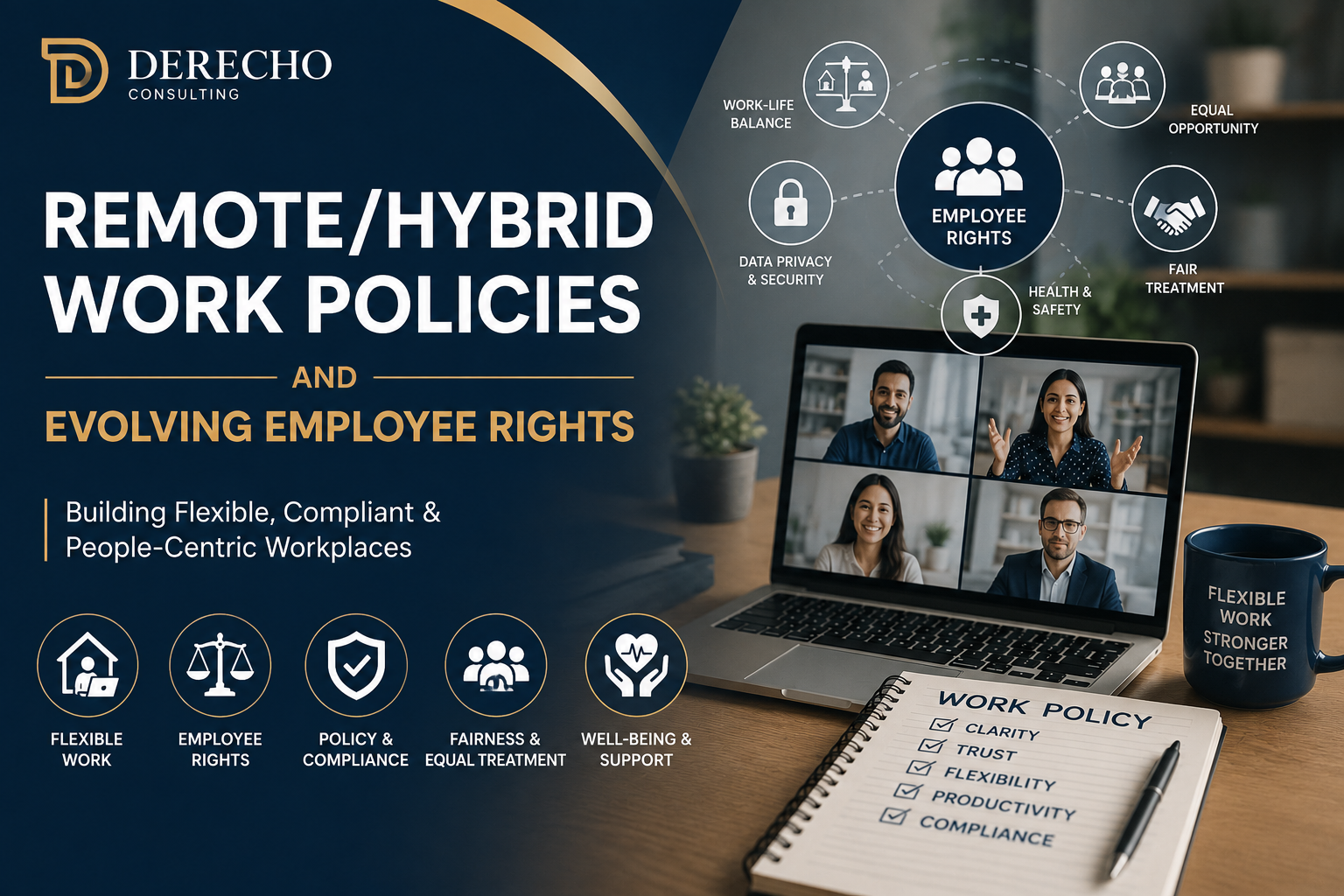
Remote and hybrid work have become permanent workplace models for many organizations. While these flexible arrangements improve employee satisfaction and productivity, they also introduce new legal and compliance responsibilities. Understanding remote/hybrid work policies and evolving employee rights is essential for businesses that want to create compliant, secure, and employee-friendly workplaces.
As employment laws continue to evolve, HR professionals and employers must ensure their workplace policies address remote work expectations, employee privacy, working hours, cybersecurity, health and safety, and equal treatment. Moreover, organizations that proactively update their remote work policies can reduce legal risks while fostering trust and transparency among employees.
This guide explores the key legal considerations, employee rights, and best practices that businesses should understand in 2026.
Why Remote/Hybrid Work Policies and Evolving Employee Rights Matter
Flexible work arrangements have transformed the employer-employee relationship. Therefore, organizations must establish clear policies that protect both business interests and employee rights.
Effective remote and hybrid work policies help organizations:
- Ensure legal compliance.
- Protect employee privacy.
- Define workplace expectations.
- Improve productivity.
- Reduce employment disputes.
- Promote work-life balance.
Furthermore, well-defined policies create consistency across distributed teams and support long-term organizational success.
Employee Rights in Remote and Hybrid Workplaces
Employees working remotely should receive the same legal protections as those working in traditional office environments.
Organizations should ensure employees have:
- Equal employment opportunities.
- Fair compensation and benefits.
- Protection from discrimination.
- Safe working conditions.
- Access to grievance mechanisms.
- Respect for work-life balance.
Additionally, employers should communicate employee rights clearly through updated HR policies and employment agreements.
Developing Effective Remote/Hybrid Work Policies
Every organization should create comprehensive remote work policies that clearly define expectations.
These policies should address:
- Working hours and availability.
- Attendance requirements.
- Performance evaluation.
- Communication standards.
- Equipment usage.
- Expense reimbursement.
- Cybersecurity responsibilities.
- Confidentiality obligations.
Moreover, organizations should review these policies regularly to ensure they remain aligned with changing employment laws and business needs.
Employee Data Privacy and Cybersecurity
Remote work increases the importance of protecting confidential business and employee information.
Employers should implement measures to:
- Secure employee devices.
- Protect company networks.
- Use multi-factor authentication.
- Encrypt sensitive information.
- Restrict unauthorized access.
- Train employees on cybersecurity best practices.
Additionally, organizations should comply with applicable data protection laws when collecting and processing employee information.
Working Hours and Work-Life Balance
One of the biggest challenges of remote work is maintaining healthy boundaries between work and personal life.
Organizations should establish policies that:
- Define official working hours.
- Prevent excessive overtime.
- Encourage regular breaks.
- Support flexible scheduling where appropriate.
- Promote employee well-being.
Clear expectations help reduce burnout and improve employee satisfaction.
Performance Management in Hybrid Work Environments
Performance should be measured based on outcomes rather than physical presence.
HR professionals should:
- Set measurable goals.
- Conduct regular performance reviews.
- Provide continuous feedback.
- Encourage collaboration.
- Support professional development.
Furthermore, transparent performance management creates fairness across remote and office-based teams.
Health, Safety, and Employee Well-Being
Employers continue to have responsibilities for employee well-being, even when employees work remotely.
Organizations should:
- Provide ergonomic guidance.
- Promote mental health initiatives.
- Offer wellness programs.
- Encourage safe home office practices.
- Maintain employee assistance programs.
Supporting employee well-being contributes to higher productivity and improved workplace engagement.
Compliance Best Practices for Employers
Organizations can strengthen compliance by following these best practices:
- Update remote work policies annually.
- Review employment contracts regularly.
- Train managers on remote work compliance.
- Maintain secure employee records.
- Conduct periodic compliance audits.
- Monitor employment law developments.
- Seek legal advice when updating workplace policies.
Additionally, businesses should communicate policy updates clearly to ensure employees understand their rights and responsibilities.
Conclusion
Understanding remote/hybrid work policies and evolving employee rights is essential for organizations operating in today’s flexible work environment. Clear workplace policies, strong data protection practices, transparent communication, and compliance with employment laws help businesses reduce legal risks while supporting employee well-being.
As remote and hybrid work continue to evolve, organizations that prioritize legal compliance and employee rights will be better positioned to build resilient, productive, and future-ready workplaces.