
Introduction
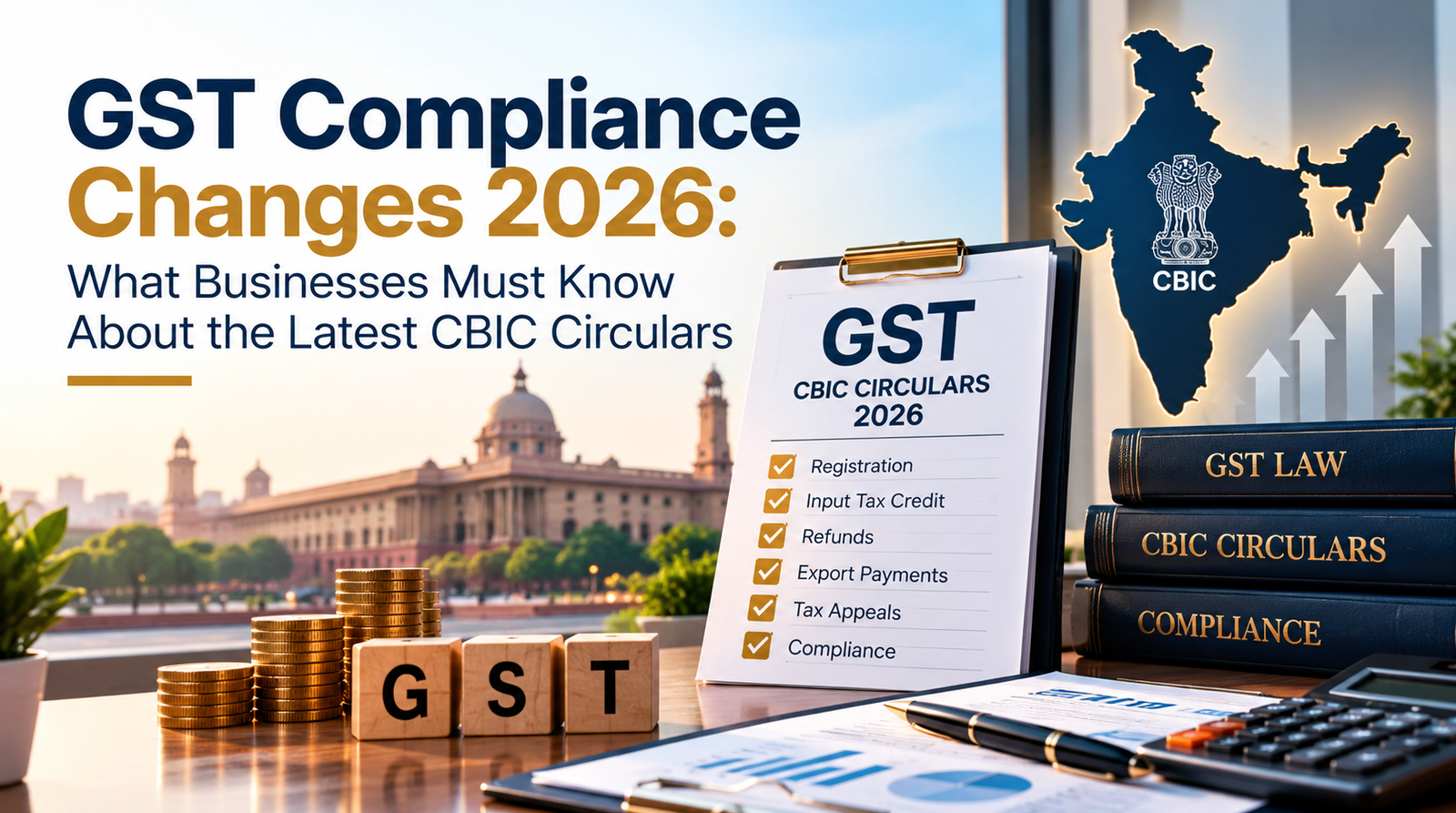
GST Compliance Changes 2026 are bringing important clarifications for businesses across India. The Central Board of Indirect Taxes and Customs (CBIC) issued eight GST circulars on 26 October 2026, covering registration, tax demands, appeals, Input Tax Credit (ITC), export payments and refunds.
CBIC also issued two further GST circulars on 28 October 2026, addressing GST treatment for selected transactions involving research and development grants, shipping, vehicle leasing, toys, used cars and other matters.
These updates are important for companies, exporters, automobile dealers, banks, NBFCs and organisations operating across multiple states. They may affect tax documentation, refund claims, credit distribution and departmental proceedings.
Understanding the latest GST Compliance Changes 2026 can help businesses review their tax procedures and identify areas that require attention.
In this article, we explain the key CBIC circulars and share a practical compliance checklist for Indian businesses.
1. GST Registration: Clearer Documentation and Procedures
CBIC Circular No. 257/03/2026-GST, issued on 26 October 2026, provides guidelines for handling GST registration applications.
The circular aims to make the registration process more consistent. It also helps reduce unnecessary document requests and delays.
The guidelines cover:
- Documents required to establish the principal place of business.
- Requirements for owned, rented and consent-based premises.
- Documentation for co-working spaces and Special Economic Zones.
- Guidance on registration applications and supporting declarations.
- Frequently asked questions to help applicants understand the process.
What businesses should do
Businesses applying for GST registration should verify their address details and supporting documents before submitting an application. They should also keep ownership records, rental agreements or consent documents ready, wherever applicable.
2. GST Notices, Demand and Appeal Proceedings
CBIC Circular No. 258/04/2026-GST provides clarification on demand, adjudication and appeal proceedings under the CGST Act, 2017.
This circular is important for businesses dealing with GST notices and departmental proceedings.
It provides guidance on the information that should be included in show-cause notices and the handling of adjudication proceedings.
The clarification also emphasises the importance of proper reasoning and supporting evidence when tax authorities determine a demand.
What businesses should do
Businesses should review GST notices carefully and check the facts, tax periods and legal grounds mentioned in them. They should maintain relevant invoices, returns, payment records and supporting documents before submitting a response.
3. GST Appeal Pre-Deposit: Important Clarifications
CBIC Circular No. 259/05/2026-GST clarifies issues relating to pre-deposit payments under Sections 107 and 112 of the CGST Act.
A pre-deposit is an amount that a taxpayer may be required to pay when filing an appeal against a GST order.
The circular provides guidance on the calculation, payment and refund treatment of these amounts.
These clarifications are relevant to businesses involved in GST disputes and appellate proceedings.
What businesses should do
Before filing an appeal, businesses should:
- Verify the disputed tax amount.
- Calculate the applicable pre-deposit.
- Maintain proof of payment.
- Review the relevant appeal requirements.
- Track refund eligibility after receiving a favourable order.
4. Input Service Distributor: GST Credit Distribution
CBIC Circular No. 260/06/2026-GST provides clarification on Input Service Distributor (ISD) provisions.
An ISD mechanism helps businesses distribute eligible Input Tax Credit on common input services to their relevant GST registrations.
This is particularly important for organisations with multiple offices, branches or business locations.
The clarification addresses issues relating to ISD registration, credit distribution and the responsibilities of different registrations.
What businesses should do
Businesses operating across multiple locations should review their ISD arrangements. They should verify common service invoices, credit distribution records and the eligibility of the receiving registrations.
5. GST Input Tax Credit for Banks and NBFCs
CBIC Circular No. 261/07/2026-GST clarifies issues relating to Section 17(4) of the CGST Act.
This provision is relevant to banking companies, financial institutions and NBFCs that use the prescribed method for determining eligible Input Tax Credit.
The circular provides guidance on the application of the relevant provisions and related reporting procedures.
What businesses should do
Banks and NBFCs should review their ITC calculations and GST return reporting. They should also ensure that their accounting records reflect the applicable method of credit calculation.
6. GST Input Tax Credit on Demo Vehicles
CBIC Circular No. 262/08/2026-GST clarifies the availability of Input Tax Credit on demonstration vehicles used by authorised agents appointed by motor vehicle manufacturers.
The clarification relates to the dealer-agency model and the earlier position explained under Circular No. 231/25/2024-GST.
This development is relevant to automobile dealers who purchase vehicles for demonstration purposes.
What businesses should do
Automobile dealers should review their demonstration vehicle arrangements, purchase invoices and existing ITC claims. They should assess the impact of the latest clarification before making any adjustments.
7. GST Rules for Export Payments and Refunds
CBIC Circular No. 263/09/2026-GST provides clarification on the receipt of payments for exports of goods and services.
Exporters must maintain appropriate records to demonstrate that export proceeds have been received through permitted payment arrangements.
The circular addresses certain payment and settlement arrangements, including set-offs permitted under applicable foreign exchange regulations.
This is important because export payment requirements can affect refund eligibility and compliance under GST.
What businesses should do
Exporters should maintain:
- Export invoices and agreements.
- Bank statements and payment records.
- Foreign exchange documentation.
- Details of permitted payment adjustments.
- Records supporting refund claims.
Businesses should also verify the applicable RBI requirements before using any payment or settlement arrangement.
8. GST Refunds and the Omission of Rule 96(10)
CBIC Circular No. 264/10/2026-GST addresses the omission of Rule 96(10) of the CGST Rules, 2017.
The circular clarifies the retrospective treatment of the omission and its connection with export refund provisions, including Rules 89(4A) and 89(4B).
This development is particularly relevant to exporters who have pending refund applications, departmental notices or disputes connected with the earlier restriction.
What businesses should do
Exporters should review their previous refund claims and pending proceedings. They should assess whether the clarification affects their cases and seek professional advice before submitting revised claims or responses.
9. Further GST Clarifications Issued on 28 October 2026
In addition to the eight circulars issued on 26 October, CBIC issued two further GST circulars on 28 October 2026.
These circulars cover additional areas of business taxation.
The updates include:
- Clarifications on GST treatment involving research and development grants, shipping, vehicle leasing and certain financial transactions.
- Clarifications concerning GST treatment of selected products and transactions, including toys, sublimation paper, used cars and bio-stimulants.
These developments show why businesses should monitor CBIC announcements regularly. The impact of each clarification depends on the nature of the transaction and the applicable GST provisions.
What businesses should do
Companies should identify whether these clarifications apply to their products, services or business arrangements. They should also review their tax classification, invoices and accounting treatment where necessary.
10. GST Compliance Checklist for Businesses in 2026
Understanding regulatory updates is only the first step. Businesses must also review their existing GST procedures and make changes wherever required.
Use the following checklist to strengthen your GST compliance process.
- Review the latest CBIC circulars and GST notifications.
- Verify GST registration details and business address documents.
- Reconcile sales invoices with GST returns.
- Review Input Tax Credit eligibility and supporting invoices.
- Check ISD registration and credit distribution procedures.
- Verify export payment records and refund documentation.
- Review GST notices and pending appeal matters.
- Check tax classification for applicable goods and services.
- Update accounting systems and internal tax procedures.
- Maintain accurate financial and transaction records.
- Consult a qualified tax professional when a clarification affects your business.
Following these steps can help organisations identify compliance gaps and reduce avoidable errors.
11. Why Businesses Must Monitor GST Compliance Changes 2026
GST compliance involves more than filing returns and paying taxes on time. Businesses must also understand how regulatory clarifications affect their transactions and reporting responsibilities.
The latest GST Compliance Changes 2026 cover several important areas, including registration, Input Tax Credit, export payments, refunds and tax disputes.
Ignoring relevant updates may lead to incorrect credit claims, refund delays, documentation gaps or difficulties during departmental proceedings.
A regular compliance review can help businesses identify risks early. It can also improve coordination between finance, accounts and legal teams.
12. How Derecho Consulting Can Help
Understanding GST circulars and applying them to business transactions can be challenging. Different organisations may have different registration requirements, tax structures and reporting responsibilities.
Derecho Consulting supports businesses with GST compliance, tax advisory, documentation reviews and regulatory guidance.
Our compliance support can help businesses:
- Review existing GST compliance procedures.
- Identify potential tax and documentation gaps.
- Assess Input Tax Credit and refund-related concerns.
- Understand GST registration and reporting requirements.
- Review regulatory developments affecting business operations.
- Address GST notices and related compliance matters.
With a structured compliance approach, businesses can better understand their obligations and respond to regulatory changes.
Conclusion
The latest CBIC circulars issued in October 2026 provide important clarifications across GST registration, tax proceedings, appeals, Input Tax Credit, export payments and refunds.
These developments highlight the importance of maintaining accurate records and reviewing tax procedures regularly. Businesses should identify which circulars apply to their operations and take appropriate action.
Staying updated on GST Compliance Changes 2026 can help organisations improve their tax processes, reduce avoidable errors and manage regulatory responsibilities more effectively.
For businesses that need support with GST requirements, professional compliance guidance can help simplify the process and improve tax administration.
Disclaimer: This article is intended for general informational purposes only and does not constitute legal or tax advice. Businesses should refer to the relevant CBIC circulars, notifications and applicable GST provisions before making compliance decisions.