
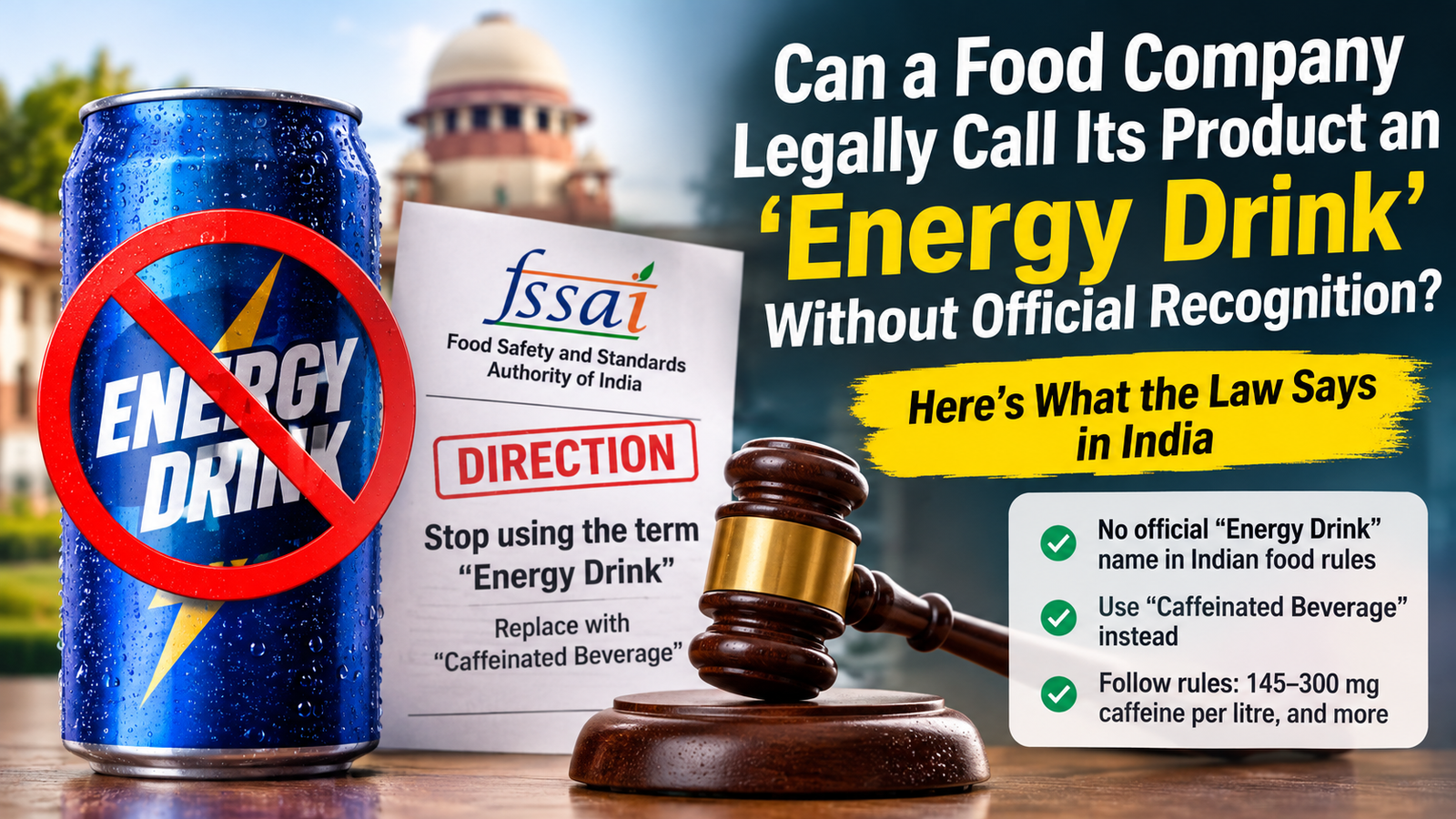
Energy drink labelling in India has become a legal fight. In June 2026, the food regulator told brands to stop calling high-caffeine drinks “energy drinks.” Its reason was simple. India’s food rules do not recognise “energy drink” as a product name. Big brands disagree, and the Delhi High Court is now involved. So can a company legally use the term? Here is what energy drink labelling in India looks like today, and where the dispute stands.
What Happened With Energy Drink Labelling in India
On 30 June 2026, the Food Safety and Standards Authority of India (FSSAI) sent a direction to beverage makers. It told them to stop using “energy drink” or similar terms on high-caffeine products. Companies got 90 days to withdraw labels, ads, and marketing material that used the word. The deadline was 29 September.
The order named some of the biggest brands in the market. These include Monster Energy, Red Bull, PepsiCo’s Sting and Adrenaline Rush, Reliance’s Campa Energy, and Hell Energy. FSSAI said it had not notified any standard for an “energy drink.” It suggested the term “caffeinated beverage” instead.
One point deserves attention. FSSAI did not ban the drinks themselves. It targeted the name on the pack.
Why Regulators Say the Term Is Not Recognised
India does regulate these products. However, it regulates them as caffeinated beverages. FSSAI set standards for carbonated and non-carbonated caffeinated beverages in 2016. Before the formal rules, such drinks were sold as “proprietary foods.” Those were products without a fixed recipe standard.
FSSAI’s argument rests on a technical point. India’s Food Category System lists energy drinks as a category. Yet FSSAI says that system is not meant for naming or labelling products. In its view, a category in a list is not permission to use that name on a label.
FSSAI also says the word “energy” can imply a health benefit. Claims such as “boosting energy” must be backed by scientific data. Without it, the claim is not permissible.
What the Law Requires on a Caffeinated Beverage Label
The rules for a caffeinated beverage are specific. They apply whatever the drink is called. According to FoodNavigator’s summary of the standards:
- Caffeine must be between 145 and 300 mg per litre.
- The label must say “Consume not more than 500 ml per day.”
- It must carry the caution “Not recommended for children, pregnant or lactating women, persons sensitive to caffeine.”
- Limits apply to added ingredients such as taurine, inositol, and certain vitamins.
Therefore, a company can sell a high-caffeine drink legally. It simply has to follow these standards and use the approved description.
The Brands Push Back on Energy Drink Labelling in India
The brands argue that the rules changed under their feet. In a March 2024 advisory to e-commerce companies, FSSAI itself said the term “energy” drinks could be used for products licensed under two specified categories. Companies say they relied on that position. Consequently, they call the June order unfair.
PepsiCo and Monster went to the Delhi High Court. PepsiCo warned of “grave commercial consequences” and harm to its investments. A former FSSAI official also questioned the timeline. He said FSSAI usually gives about six months for label changes, and he called 90 days insufficient given the costs.
The fight also raises a broader point. “Energy drink” is not just a description. It is a category name that shoppers know. Replacing it with “caffeinated beverage” could change how the products are sold.
Where the Court Case Stands
The case is still moving. Justice Amit Mahajan stayed the FSSAI order for now. However, he restrained PepsiCo from using the term on new batches of its products until the next hearing. Companies may still sell existing stock that carries the old label.
Meanwhile, FSSAI filed a 57-page affidavit in early November. It accused PepsiCo of marketing its drinks as energy drinks while knowing they had to meet caffeinated beverage standards. It made similar allegations against Monster. A hearing was listed for 6 November, so check for the latest order before relying on this summary.
What Could Happen to a Company That Ignores the Order
The risks are real, even though the court has paused the order. Under the Food Safety and Standards Act, penalties can follow. A former FSSAI official told FoodNavigator that non-compliant products may be seized and destroyed after legal orders. A business can face a penalty of up to ₹2 lakh for failing to follow the law, rules, or orders. A misleading advertisement can attract fines of up to ₹10 lakh. A licence can also be cancelled.
Because the case is live, the final outcome may differ. Courts can uphold, change, or set aside a regulator’s direction.
What Energy Drink Labelling in India Means for Buyers
For shoppers, the change is mostly cosmetic for now. The drink in the can stays the same. The safety warnings stay the same. Packs may soon say “caffeinated beverage” instead.
Still, the dispute carries a useful lesson. A product name on the front of a pack is not a safety guarantee. Buyers should read the caffeine content and the caution for children and pregnant women. They should also stay within the 500 ml daily limit that the label states.
Linking Labels to the Wider Fight Against Misleading Claims
This case is part of a bigger trend. Indian regulators are examining words like “healthy,” “natural,” and “100%” on food packs. They are also checking online listings and ads. For a closer look at how consumer protection rules treat misleading claims more broadly, read our full guide to misleading advertising and consumer rights in India.
Final Thought
So, can a company legally call its product an “energy drink” in India? ” The brands counter that FSSAI’s own 2024 advisory allowed the term, and the Delhi High Court has paused the order while restricting new batches from at least one company. Until the court decides, the safest position is to follow the regulator’s wording. For consumers, the more important question is not the name on the can but the caffeine inside it.
This article gives general information, not legal advice. The case is ongoing and details may change. Check the latest court orders and FSSAI notices before acting.