
Introduction
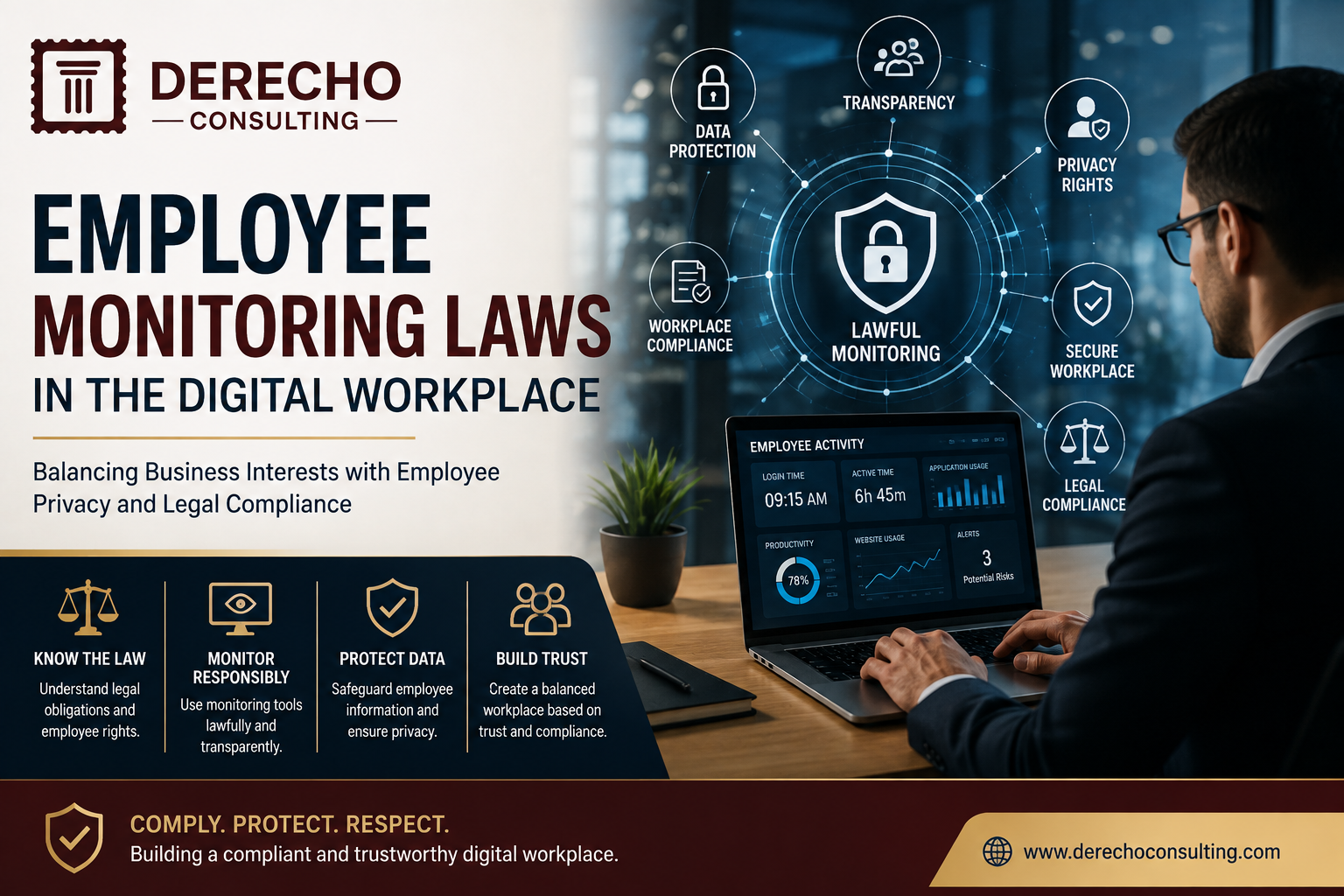
Employee Monitoring Laws in the Digital Workplace have become increasingly important as organizations adopt remote work, hybrid work models, cloud-based technologies, and digital collaboration tools. Employers often monitor employee activities to improve productivity, protect confidential information, strengthen cybersecurity, and ensure compliance with organizational policies. However, monitoring employees also raises important legal and ethical concerns related to privacy, transparency, and data protection.
Businesses must strike a balance between protecting legitimate business interests and respecting employee rights. Implementing lawful and transparent monitoring practices helps organizations maintain compliance, reduce legal risks, and build trust within the workplace.
This guide explores Employee Monitoring Laws in the Digital Workplace, explains employer responsibilities, outlines employee rights, and highlights best practices for implementing compliant workplace monitoring policies.
Why Employee Monitoring Laws Matter
Digital workplace technologies allow employers to monitor emails, internet usage, work devices, communication platforms, attendance, and productivity. While monitoring can improve operational efficiency, businesses must ensure their practices comply with applicable employment, privacy, and data protection laws.
Effective employee monitoring helps organizations:
- Protect confidential business information.
- Improve cybersecurity.
- Prevent data breaches.
- Ensure regulatory compliance.
- Enhance workplace productivity.
- Reduce insider security risks.
Transparent monitoring practices also strengthen employee confidence and reduce workplace disputes.
Types of Employee Monitoring in the Digital Workplace
Organizations may use various monitoring methods to support business operations while protecting company assets.
Common forms of monitoring include:
- Email monitoring.
- Internet and website usage monitoring.
- Computer and device activity monitoring.
- Time and attendance tracking.
- Video surveillance in permitted areas.
- Company mobile device monitoring.
- Network security monitoring.
- Access control and login monitoring.
Businesses should ensure that monitoring is proportionate, transparent, and consistent with legal requirements.
Employee Privacy Rights
Employees have legitimate expectations of privacy even when using workplace systems. Employers should clearly explain what information is monitored, why monitoring is necessary, how collected data will be used, and who can access it.
Respecting employee privacy helps organizations:
- Build trust.
- Improve workplace transparency.
- Reduce legal disputes.
- Strengthen compliance.
- Promote ethical business practices.
Employer Responsibilities
Organizations should establish clear workplace monitoring policies that define the scope, purpose, and limitations of monitoring activities.
Employers should:
- Inform employees before monitoring begins.
- Limit monitoring to legitimate business purposes.
- Protect collected information.
- Restrict unauthorized access.
- Maintain accurate monitoring records.
- Review monitoring policies regularly.
Responsible monitoring reduces legal and reputational risks.
Data Protection and Compliance
Employee monitoring often involves collecting personal information. Businesses should implement appropriate safeguards to protect monitored data and comply with applicable privacy regulations.
Organizations should:
- Encrypt sensitive information.
- Apply access controls.
- Store monitoring data securely.
- Limit data retention periods.
- Conduct regular security assessments.
- Review compliance policies.
Strong data governance improves both privacy protection and regulatory compliance.
Common Legal Challenges
Businesses implementing employee monitoring may face several legal challenges, including:
- Privacy concerns.
- Lack of employee transparency.
- Excessive monitoring practices.
- Data security risks.
- Cross-border privacy obligations.
- Employment law disputes.
Addressing these issues proactively helps organizations minimize legal exposure.
Best Practices for Employee Monitoring
Businesses should adopt responsible monitoring practices by:
- Creating written monitoring policies.
- Providing employee training.
- Obtaining required acknowledgments where appropriate.
- Monitoring only business-related activities.
- Reviewing monitoring programs regularly.
- Protecting employee data.
- Maintaining transparency throughout the monitoring process.
A balanced approach protects both organizational interests and employee rights.
How Technology Supports Lawful Monitoring
Modern workplace monitoring solutions help organizations:
- Detect cybersecurity threats.
- Protect sensitive business information.
- Monitor compliance activities.
- Improve productivity reporting.
- Secure digital work environments.
- Support incident investigations.
Technology should always be used responsibly and in accordance with applicable legal requirements.
How Derecho Consulting Can Help
Derecho Consulting assists organizations in developing legally compliant employee monitoring policies, strengthening data privacy practices, conducting compliance assessments, implementing workplace governance frameworks, and managing employment law risks. Our experts help businesses balance operational security with employee privacy and regulatory compliance.
Conclusion
Employee Monitoring Laws in the Digital Workplace continue to evolve as organizations embrace digital transformation and flexible work environments. Businesses that implement transparent monitoring policies, respect employee privacy, protect personal data, and comply with legal requirements are better positioned to reduce risks while maintaining workplace trust.
By adopting responsible employee monitoring practices, organizations can improve cybersecurity, strengthen compliance, protect confidential information, and create a secure, productive, and legally compliant digital workplace.