
Introduction
E-commerce GST Compliance is an important consideration for small online sellers operating in India. Businesses selling products through online marketplaces must understand the GST registration requirements, return filing procedures, tax payment obligations, and documentation rules that apply to their activities.
The GST reforms discussed in October 2026 have brought renewed attention to simplified registration for eligible small e-commerce sellers, refund-processing improvements, and proposed changes to GST return forms. These measures aim to make tax administration more efficient and reduce certain compliance challenges for businesses.
However, a GST Council recommendation or proposed change does not automatically become an effective legal requirement. Sellers must verify the applicable notifications, eligibility conditions, and implementation dates before changing their existing compliance procedures.
This guide explains the key GST developments relevant to small online sellers, how the proposed measures may affect their businesses, and the practical steps they can take to prepare for changing requirements in 2026.
What Is E-commerce GST Compliance?
E-commerce GST Compliance refers to meeting the applicable Goods and Services Tax obligations associated with selling products through online marketplaces and other electronic commerce channels.
Depending on the business model and applicable rules, these responsibilities may include obtaining GST registration, issuing appropriate invoices, reporting sales, paying tax, maintaining transaction records, and claiming eligible Input Tax Credit (ITC).
The requirements can differ according to the type of goods sold, turnover, state of operation, marketplace arrangement, and applicable exemptions or special procedures.
Online sellers should review their individual circumstances rather than assuming that the same GST rules apply to every marketplace business.
Key GST Reforms from November 2026
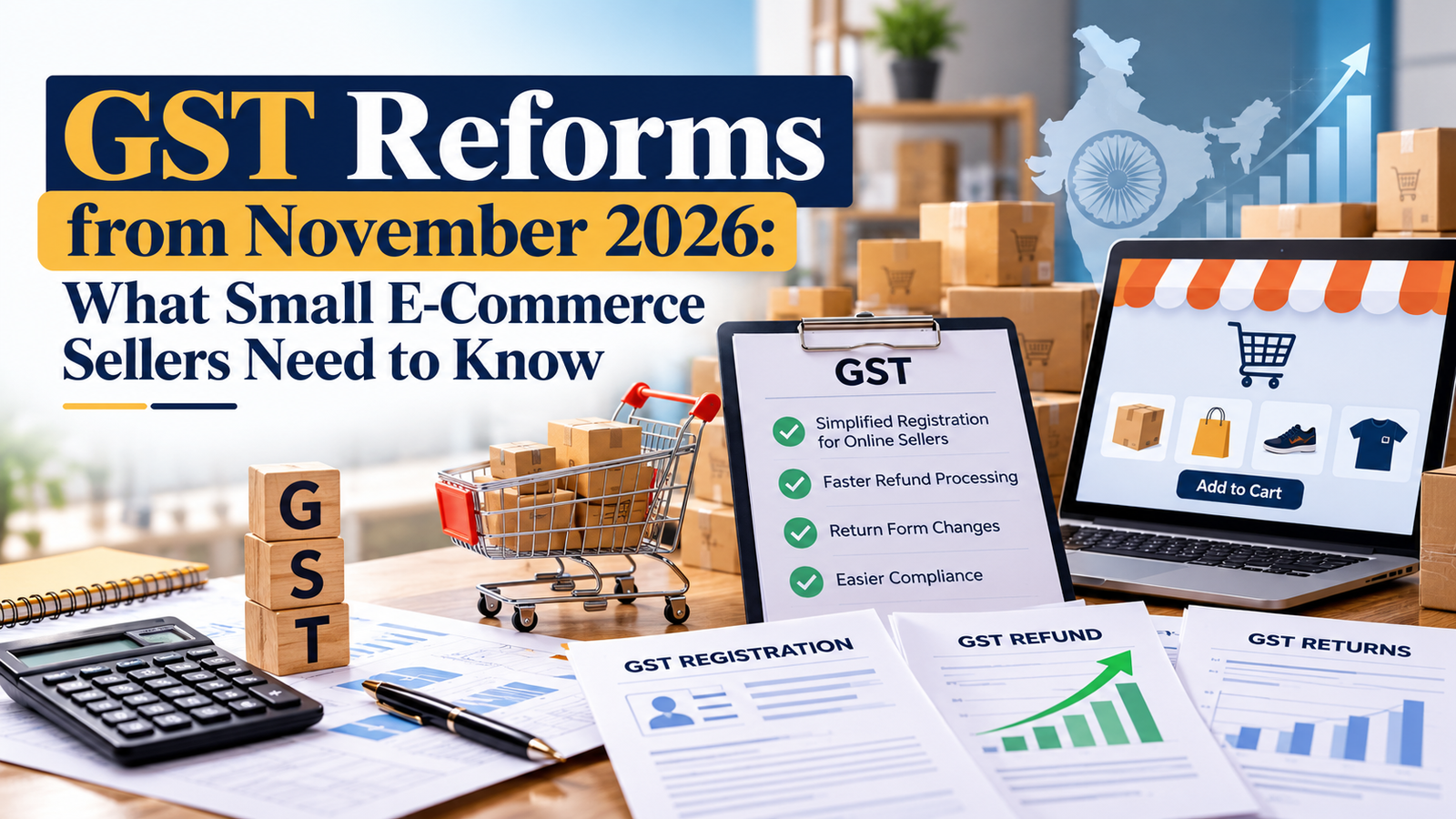
The GST Council has recommended measures aimed at simplifying selected compliance processes and improving the accuracy of GST reporting.
The main areas relevant to small e-commerce businesses include:
- Simplified registration mechanisms for eligible small suppliers selling goods through e-commerce operators.
- Improvements intended to make eligible GST refund processing more efficient.
- Proposed changes to GST return forms and reconciliation procedures.
- Measures intended to improve consistency between reported sales, tax liabilities, and eligible ITC.
Businesses should monitor official announcements to confirm the final requirements and effective dates for each measure.
1. Simplified GST Registration for Eligible Online Sellers
One important area of reform is the proposed simplified registration mechanism for eligible small suppliers selling goods through e-commerce operators.
Subject to the scheme’s applicable conditions, qualifying sellers may be able to obtain registration in certain states or union territories where they do not have a physical business presence. This may help some businesses expand their online sales without establishing a conventional business location in every state.
Eligibility is conditional. Businesses should verify requirements relating to the type of supplies, turnover or tax liability limits, marketplace participation, registration procedures, and any prescribed consent from the e-commerce operator.
What Should Small Sellers Check?
Before relying on a simplified registration mechanism, sellers should:
- Confirm that their business and products fall within the scheme’s scope.
- Verify the applicable turnover or tax liability conditions.
- Check whether their e-commerce operator participates in or supports the relevant procedure.
- Confirm any requirements concerning warehouses or declared places of business.
- Complete the prescribed registration and verification process.
- Maintain records required under the applicable GST rules.
The scheme should not be treated as a general exemption from GST registration. Sellers must confirm their eligibility under the operative provisions before making decisions.
2. GST Refund-Processing Improvements
GST refunds can affect cash flow, particularly for eligible exporters and businesses that fall within the applicable refund categories.
The announced reform agenda includes measures intended to improve refund processing, reduce unnecessary manual intervention, and make procedures more efficient for eligible taxpayers.
For small online businesses, a more efficient refund process could help improve cash-flow management when a valid refund is due. However, refunds remain subject to the relevant eligibility requirements, documentation, verification procedures, and implementation arrangements.
Businesses should continue to maintain accurate invoices, payment records, return details, and supporting documentation for any refund application.
3. Proposed GST Return Form Changes
Accurate return filing is essential for online sellers because marketplace transaction records must be reconciled with their accounting records and GST returns.
Differences between GSTR-1, GSTR-3B, and relevant ITC information may arise from incorrect invoice values, reporting-period differences, credit notes, or supplier reporting delays.
The GST Council has recommended changes intended to improve reconciliation between outward supply information, tax liabilities, and eligible ITC.
Draft GST return forms are expected to be available for public comments from 1 November to 30 November 2026. The proposed revised return mechanism has been recommended for implementation from 1 April 2027, subject to the applicable process.
These dates should not be interpreted as meaning that every revised requirement becomes mandatory on 1 November 2026. Businesses should continue to follow the rules currently in force until applicable changes are formally implemented.
4. How the Reforms May Affect Small E-Commerce Businesses
The potential impact will vary according to a seller’s size, registration status, marketplace arrangements, and transaction volume.
New and Growing Online Sellers
Eligible sellers may benefit from a simplified route to registration in additional states, subject to the scheme’s conditions and the applicable implementation rules.
Sellers Managing Refunds
Businesses with eligible refund claims may benefit from process improvements, depending on the final procedures and the nature of their claims.
Sellers With Multiple GST Registrations
Improved return reconciliation may help businesses identify discrepancies between marketplace sales reports, invoices, accounting records, and GST returns.
Finance and Compliance Teams
Businesses may need to review internal controls, train staff, and update their reporting processes when new requirements are officially confirmed.
5. E-commerce GST Compliance Checklist for Small Sellers
Small sellers can prepare for regulatory changes by maintaining accurate records and reviewing their current tax procedures.
Step 1: Review GST Registration Requirements
Check whether your business is required to register and whether any applicable special procedure or exemption is available. Do not rely on a proposed scheme until its eligibility conditions and effective date are confirmed.
Step 2: Verify Marketplace Arrangements
Review your e-commerce operator’s requirements for seller registration, invoice generation, sales reporting, and any relevant warehouse or place-of-business documentation.
Step 3: Maintain Accurate Sales Records
Keep invoices, order reports, cancellations, returns, credit notes, and payment records organised. Reconcile marketplace reports with your accounting system.
Step 4: Reconcile GST Returns
Compare GSTR-1, GSTR-3B, and relevant ITC information. Investigate discrepancies and correct errors through the procedures permitted under applicable GST rules.
Step 5: Review Input Tax Credit
Verify purchase invoices and confirm that ITC claims meet the applicable eligibility requirements. Follow up with suppliers when invoice information is missing or incorrect.
Step 6: Organise Refund Documentation
If your business is eligible for a GST refund, maintain complete supporting records and check the applicable filing and verification requirements.
Step 7: Monitor Official GST Updates
Follow notifications and announcements from the GST Council, the Central Board of Indirect Taxes and Customs (CBIC), and the official GST Portal.
6. Common GST Compliance Mistakes Online Sellers Should Avoid
Even when registration or reporting procedures are simplified, businesses must continue meeting their applicable tax obligations.
Common mistakes include:
- Assuming that every online seller qualifies for a simplified registration mechanism.
- Treating a recommendation as an implemented legal requirement.
- Reporting marketplace sales inaccurately.
- Failing to reconcile invoices with GST returns.
- Claiming ITC without checking eligibility.
- Submitting incomplete refund applications.
- Ignoring filing deadlines while waiting for proposed reforms to take effect.
A consistent review process helps businesses identify errors early and maintain a reliable record of their tax compliance activities.
7. How Derecho Consulting Can Help
E-commerce GST Compliance requires businesses to understand their applicable registration requirements, maintain accurate transaction records, and monitor regulatory changes.
Derecho Consulting can support businesses with GST compliance reviews, registration-related guidance, return reconciliation, documentation checks, and assistance in understanding relevant tax developments, depending on the scope of engagement.
Professional guidance can help online sellers assess their compliance position, identify documentation gaps, and prepare for confirmed regulatory changes.
Businesses should obtain advice based on their individual circumstances before making decisions about GST registration, tax payments, ITC claims, or refunds.
Conclusion
E-commerce GST Compliance remains important for small online sellers as India continues to review and improve its GST procedures. The reforms discussed in 2026 may offer opportunities for eligible sellers through simplified registration mechanisms, more efficient refund processing, and improved return reconciliation.
However, the practical benefits depend on eligibility conditions, applicable notifications, and confirmed implementation dates. Businesses should avoid treating proposed changes as current legal requirements without checking official guidance.
By maintaining accurate invoices, reconciling GST returns, reviewing ITC eligibility, organising supporting records, and monitoring official announcements, small e-commerce sellers can strengthen their compliance processes and prepare for future changes.
For assistance with GST compliance, registration-related questions, and business tax requirements, contact Derecho Consulting.
Disclaimer: This article is for general informational purposes only and does not constitute legal or tax advice. GST Council recommendations and proposed changes may be subject to notifications, rules, eligibility conditions, and implementation timelines. Businesses should verify the latest official requirements before taking action.