
Introduction
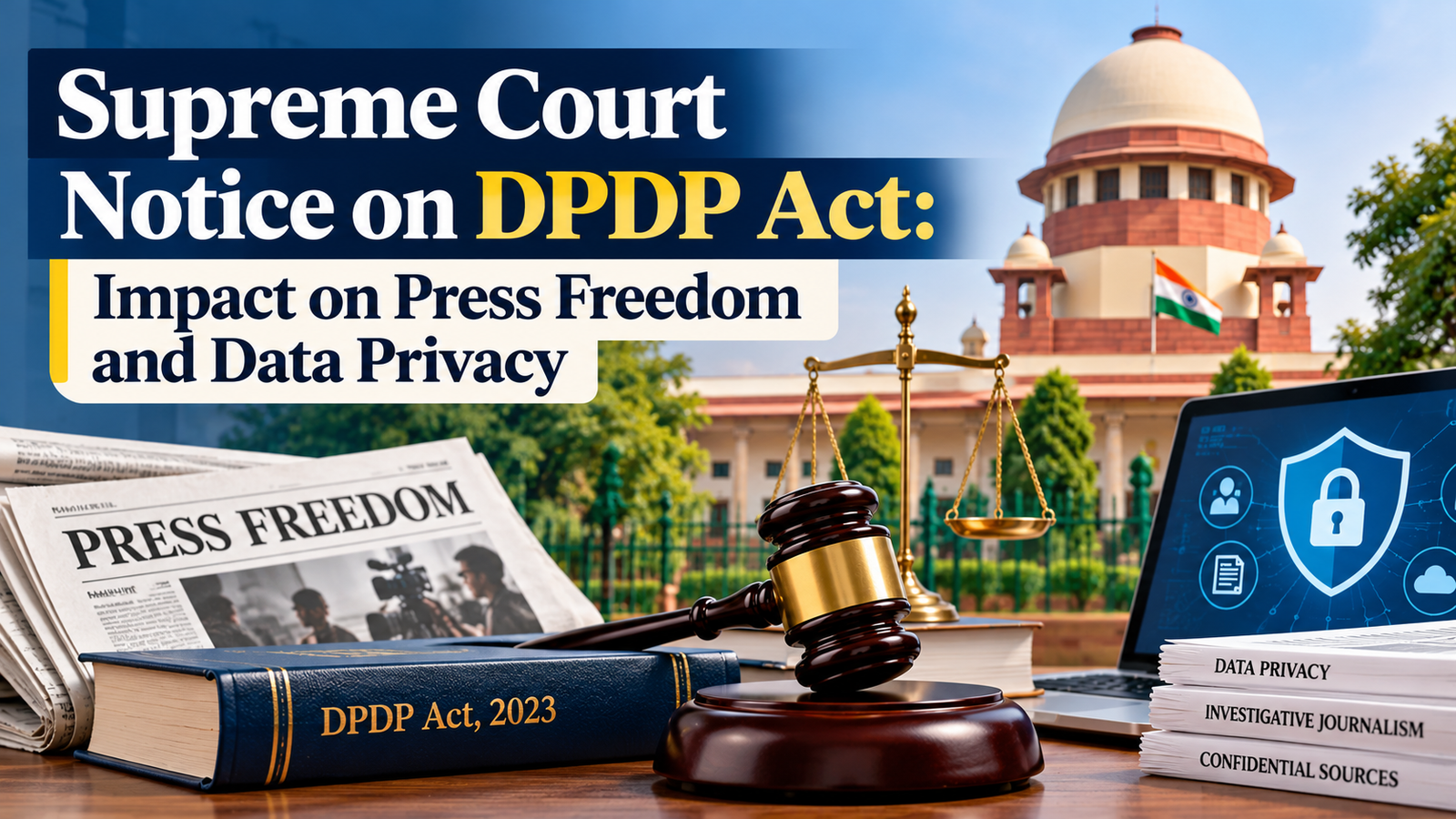
DPDP Press Freedom has become an important topic in India’s debate over data protection, journalism, and freedom of expression. The Digital Personal Data Protection Act, 2023 (DPDP Act), aims to protect personal data. However, publishers have raised concerns about how certain provisions could affect news reporting, confidential sources, and access to information.
The Supreme Court’s consideration of a legal challenge to the DPDP framework has brought these questions into focus. For journalists, publishers, businesses, and compliance professionals, understanding the potential implications is essential. The case highlights the need to balance individual privacy rights with public interest journalism and responsible data handling.
What Is the Digital Personal Data Protection Act?
The Digital Personal Data Protection Act, 2023, establishes a legal framework for processing digital personal data in India. It sets out obligations for organisations that handle personal information and recognises rights for individuals whose data is processed.
Businesses may need to review how they collect, use, store, protect, and delete personal data. Their responsibilities can include providing appropriate notices, establishing valid grounds for processing, implementing security safeguards, and responding to requests from individuals, as applicable under the law.
The DPDP framework is relevant to companies, digital platforms, publishers, and other organisations that process digital personal data.
DPDP Press Freedom: Why Is the Supreme Court Challenge Important?
The legal challenge has raised questions about how data protection requirements may interact with journalism and freedom of expression. Publishers have expressed concern that some requirements could create practical difficulties when reporting on matters of public interest.
One key concern is whether journalists and news organisations have sufficient protection when processing personal data for reporting. Other issues include requests to erase personal information, the preservation of news archives, and the protection of confidential sources.
These are concerns raised in the legal challenge. Their final legal position depends on the applicable law and the outcome of the proceedings.
Key Press Freedom Concerns
1. Journalism and public interest reporting
Journalists regularly process personal information while investigating public issues, reporting allegations, and documenting events. Publishers are concerned that applying data protection obligations without suitable safeguards could complicate legitimate reporting.
2. Protection of confidential sources
Confidential sources can help journalists investigate issues involving public accountability. Publishers have raised concerns about whether data-related requests or disclosure obligations could affect the ability to protect these sources.
3. Requests to erase personal information
Data protection frameworks may provide individuals with rights concerning their personal information, subject to legal conditions and exceptions. Publishers are concerned that requests to erase information could create uncertainty about retaining published reports, historical records, and news archives.
4. Access to information and transparency
The relationship between privacy and access to public information is another important issue. The challenge has raised concerns about how changes to information-access rules could affect transparency and the public’s ability to obtain information.
DPDP Press Freedom and Its Impact on Businesses
Although the dispute includes concerns about journalism, businesses should also pay attention to developments in data protection law. Organisations that process personal data need clear policies and practical compliance procedures.
Businesses should consider the following steps:
- Review data collection: Identify what personal data the organisation collects and why it is needed.
- Check privacy notices: Ensure notices clearly explain relevant data processing practices.
- Strengthen security: Use appropriate technical and organisational safeguards to protect personal information.
- Manage data retention: Establish suitable retention and deletion procedures that account for applicable legal obligations.
- Train employees: Help teams understand privacy responsibilities and safe data-handling practices.
- Monitor legal developments: Follow official updates and obtain professional advice when changes may affect the organisation.
Businesses can also review a relevant DPDP compliance checklist for Indian businesses to identify practical areas for further assessment.
How Can Organisations Prepare?
Organisations should not wait for every legal question to be resolved before reviewing their data protection practices. They can start by mapping personal data, documenting processing activities, reviewing access controls, and identifying gaps in their privacy policies.
Media organisations may also benefit from clear internal procedures for handling sensitive information, protecting sources, responding to data requests, and preserving records where legally appropriate.
Conclusion
DPDP Press Freedom highlights the complex relationship between data privacy, journalism, and public accountability in India. The legal challenge raises important questions about how privacy protections can operate alongside public interest reporting, confidential sources, and the preservation of news archives.
For businesses, the issue is also a reminder to review data collection, security, retention, and privacy policies regularly. Organisations should follow the proceedings, rely on official updates, and seek legal advice where necessary. A balanced approach can help protect personal information while respecting lawful reporting and other applicable rights.
Disclaimer: This article is for general informational purposes only and does not constitute legal advice. The legal issues discussed remain subject to applicable law and relevant judicial decisions.