
Introduction
Consumer Rights in the Age of AI-Powered Digital Services are becoming increasingly important as businesses use artificial intelligence to deliver products, recommendations, customer support, advertising, payments, and other digital services. AI can make digital experiences faster and more personalized, but it can also create new risks involving transparency, privacy, fairness, misleading information, and consumer protection.
AI-powered digital services may analyze consumer information, recommend products, generate content, determine prices, respond to complaints, and influence purchasing decisions. Businesses must therefore ensure that these technologies are used responsibly and do not undermine established consumer rights.
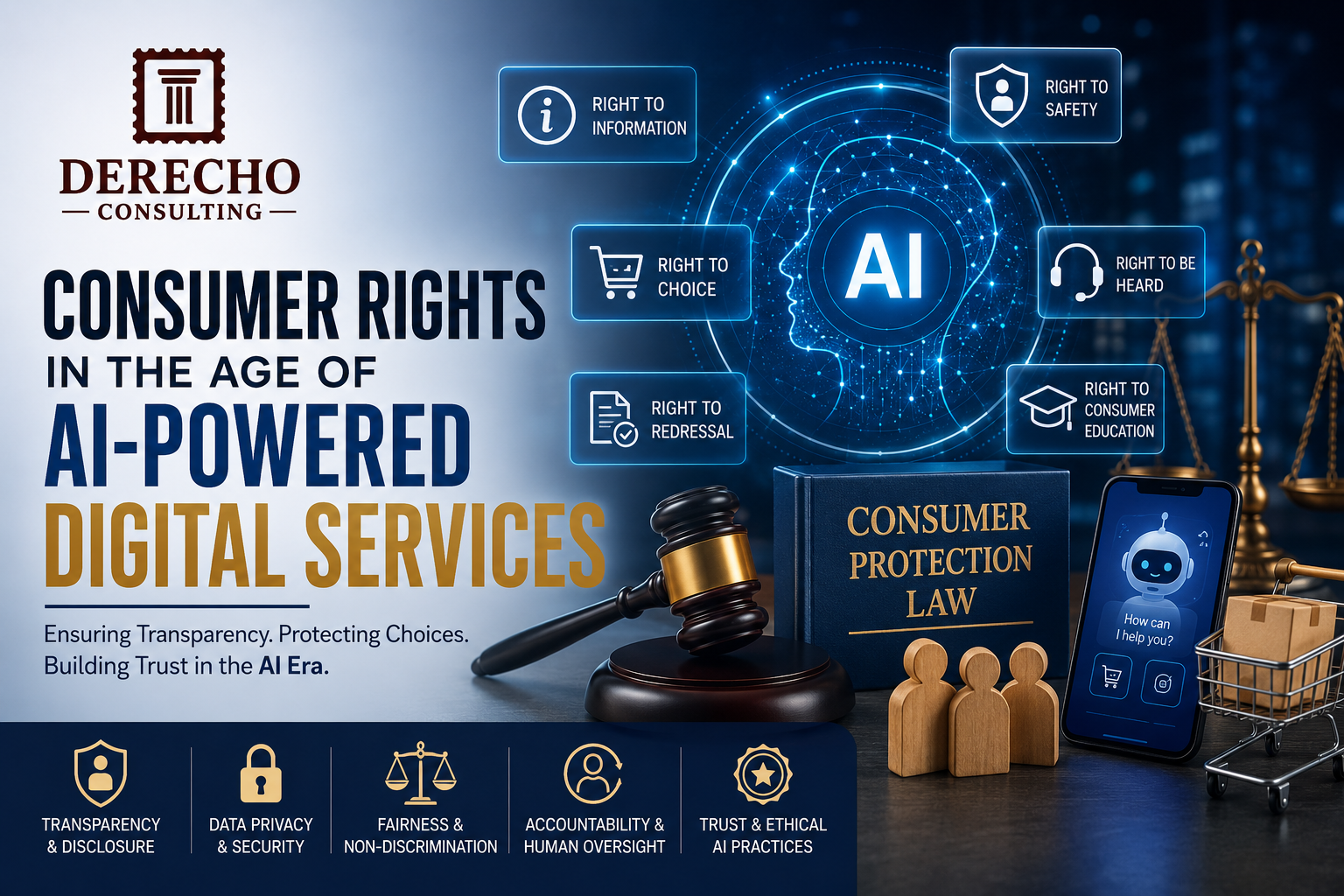
India’s consumer protection framework recognizes important rights including the right to safety, information, choice, being heard, redressal, and consumer education. As AI becomes more deeply integrated into digital commerce and services, businesses need to consider how these rights apply to increasingly automated customer experiences.
This guide explores consumer rights in the age of AI-powered digital services, including transparency, data privacy, algorithmic decisions, misleading AI-generated information, unfair practices, accountability, and practical compliance measures for businesses in 2026.
Why Consumer Rights Matter in AI-Powered Digital Services
AI is changing the way consumers interact with businesses. Chatbots, recommendation engines, virtual assistants, automated pricing systems, AI-generated advertising, and personalized digital platforms are becoming common across industries.
AI-powered services can help businesses:
- Provide faster customer support.
- Personalize products and services.
- Improve digital experiences.
- Analyze consumer preferences.
- Detect fraudulent activity.
- Automate routine processes.
- Deliver services at scale.
However, automation should not come at the expense of consumer protection.
Businesses should ensure that AI systems remain transparent, reliable, secure, and accountable while providing consumers with appropriate information and support.
Key Consumer Rights Challenges
1. Right to Information and Transparency
Consumers should receive clear and understandable information about products and services.
AI-powered systems can make this more difficult when recommendations, pricing, advertisements, or customer-service responses are generated automatically.
Businesses should provide appropriate disclosures and avoid presenting AI-generated information in a way that could mislead consumers.
2. AI-Generated Errors and Misleading Information
AI systems can generate inaccurate or incomplete information.
For example, an AI shopping assistant could provide incorrect product information, while an automated customer-service system could give a consumer inaccurate instructions about refunds, warranties, or services.
Businesses should establish processes for reviewing AI-generated information and providing human assistance when necessary.
A recent consumer commission decision in Telangana involving AI-generated photographs also demonstrates that businesses can face consumer-protection consequences when the service delivered does not match what was promised.
3. Data Privacy and Consumer Information
AI-powered digital services often depend on consumer data.
Businesses may process information such as:
- Names and contact details.
- Purchase history.
- Search activity.
- Customer conversations.
- Preferences.
- Location information.
- Online behavior.
Organizations should clearly understand what information is collected, why it is processed, how it is protected, and who may have access to it.
Privacy and consumer protection should therefore be considered together when developing AI-powered services.
4. Algorithmic Bias and Unfair Outcomes
AI systems may produce unfair outcomes when their training data or decision-making processes contain biases.
Algorithmic bias can affect recommendations, advertisements, pricing, customer segmentation, or access to certain services.
Businesses should regularly test AI systems for potentially discriminatory or unfair outcomes and establish appropriate review procedures.
5. AI-Powered Advertising and Recommendations
AI can analyze consumer behavior to personalize advertisements and product recommendations.
Although personalization can improve the customer experience, businesses must ensure that AI-powered marketing does not become deceptive or manipulative.
Companies should carefully review:
- Product claims.
- Pricing information.
- Promotional messages.
- AI-generated advertisements.
- Personalized recommendations.
- Disclosures and terms.
Consumer protection concerns are particularly relevant as AI systems become more involved in influencing purchasing decisions and digital marketplace behavior.
6. Dark Patterns and Manipulative Design
AI can make digital interfaces highly personalized, creating potential risks when businesses use technology to pressure consumers into making decisions.
Examples may include:
- Repeated purchase prompts.
- Hidden charges.
- Difficult cancellation processes.
- Misleading recommendations.
- Artificial urgency.
- Confusing subscription options.
Businesses should review AI-powered interfaces to ensure that consumers can make informed choices without being unfairly manipulated.
7. Accountability for AI Decisions
When an AI system makes an incorrect recommendation or provides misleading information, determining responsibility can become challenging.
Businesses should establish clear accountability structures that identify who is responsible for:
- Monitoring AI systems.
- Reviewing outputs.
- Handling consumer complaints.
- Correcting errors.
- Managing risks.
- Maintaining compliance.
Human oversight can help businesses respond quickly when automated systems produce harmful or inaccurate outcomes.
Consumer Protection and AI Compliance
Businesses using AI-powered digital services should consider consumer protection alongside privacy, cybersecurity, and technology-law requirements.
An effective compliance framework should include:
- AI governance policies.
- Consumer disclosure procedures.
- Data protection controls.
- Human review mechanisms.
- Complaint-handling processes.
- Algorithmic risk assessments.
- Security monitoring.
- Regular compliance reviews.
India’s government has also emphasized the need for legal safeguards around potential harms from AI and digital technologies, including protections for users and vulnerable groups.
Best Practices for Businesses
Organizations providing AI-powered digital services should:
- Inform consumers when AI significantly influences an interaction.
- Provide accurate and understandable information.
- Maintain human support options.
- Protect consumer data.
- Test AI systems for bias.
- Monitor AI-generated content.
- Review personalized advertising practices.
- Maintain transparent pricing and service information.
- Establish effective complaint-resolution procedures.
- Document AI governance processes.
- Conduct regular legal and compliance assessments.
A proactive approach can help businesses build consumer trust while reducing legal and reputational risks.
Risks of Ignoring Consumer Rights
Failure to address consumer rights in AI-powered services can expose businesses to several risks.
Potential consequences may include:
- Consumer complaints.
- Regulatory scrutiny.
- Legal disputes.
- Financial penalties.
- Reputational damage.
- Loss of customer trust.
- Increased compliance costs.
Businesses should therefore treat consumer protection as an important part of responsible AI adoption rather than as a separate compliance activity.
How Derecho Consulting Can Help
Derecho Consulting can help businesses navigate the legal challenges associated with AI-powered digital services through consumer protection advisory, AI governance, data privacy, technology law, regulatory compliance, risk assessment, and corporate advisory services.
A structured legal and compliance approach can help organizations develop responsible AI practices, protect consumer interests, manage emerging risks, and adapt to evolving digital regulations.
Conclusion
Consumer Rights in the Age of AI-Powered Digital Services are becoming increasingly important as artificial intelligence transforms digital commerce and customer experiences. While AI can improve efficiency, personalization, and accessibility, businesses must ensure that automated systems do not compromise transparency, privacy, fairness, or consumer protection.
By implementing responsible AI governance, maintaining human oversight, protecting consumer data, monitoring AI-generated information, and providing effective complaint and redressal mechanisms, businesses can create digital services that are innovative and trustworthy.
As AI continues to influence how consumers discover, purchase, and use digital services, organizations that place consumer rights at the center of their AI strategies will be better positioned to build long-term trust and comply with evolving legal requirements.