
Introduction
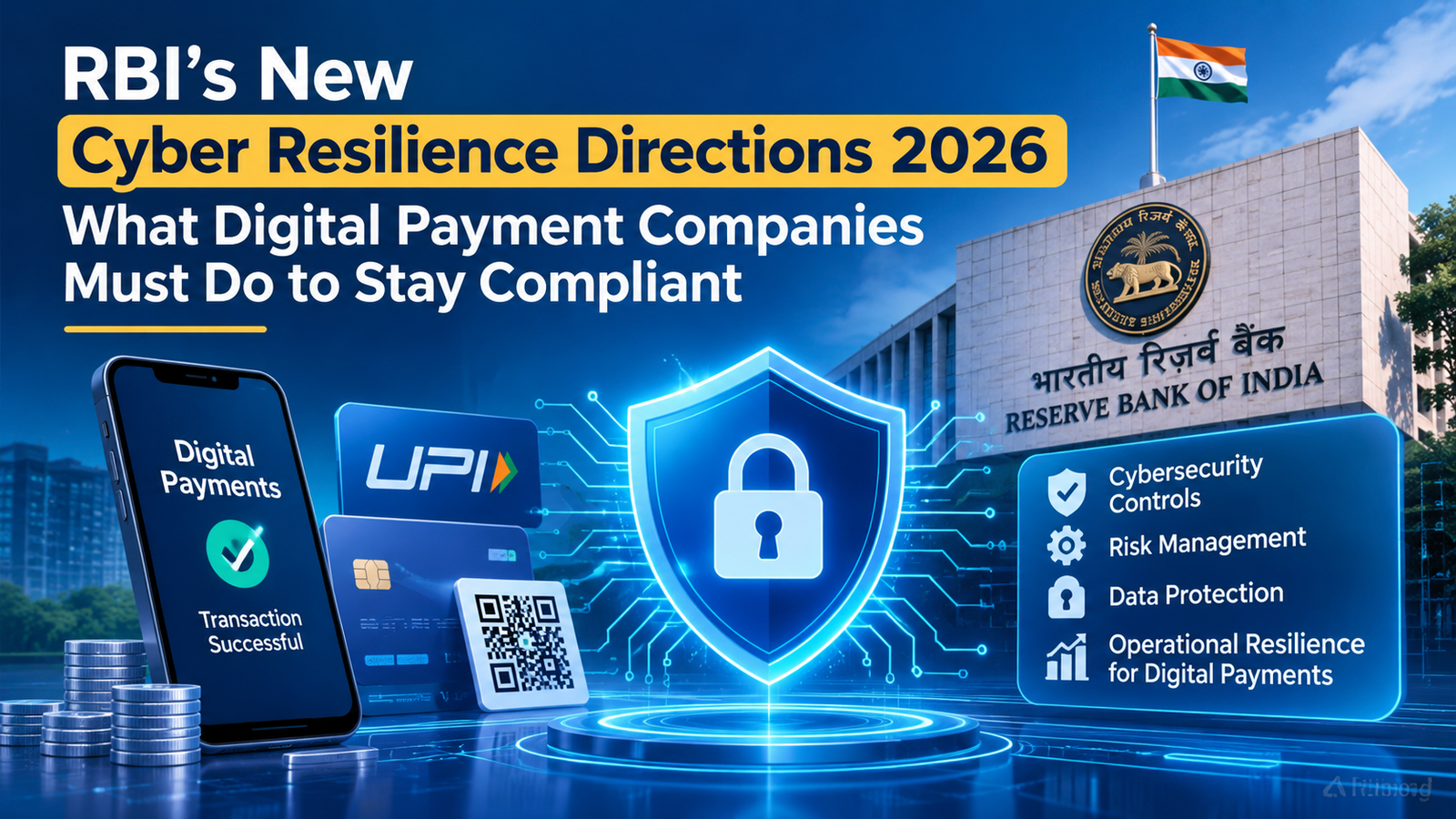
RBI Cyber Resilience Directions are becoming increasingly important as India’s digital payment ecosystem continues to expand. From UPI transactions and mobile wallets to payment gateways and online banking, digital payments have transformed how businesses and consumers manage financial transactions. However, this growth also creates cybersecurity risks, data breaches and operational challenges.
To strengthen India’s digital payment security framework, the Reserve Bank of India (RBI) issued the Master Directions on Cyber Resilience and Digital Payment Security Controls for Non-bank Payment System Operators on 5 November 2026.
These directions establish a structured framework for identifying, assessing and managing cybersecurity risks. They focus on strengthening IT governance, protecting sensitive information, improving access controls and ensuring secure digital payment operations.
For authorised non-bank Payment System Operators (PSOs), understanding these requirements is essential for maintaining regulatory compliance and protecting customers from emerging cyber threats.
What Are RBI’s Cyber Resilience Directions 2026?
The RBI Cyber Resilience Directions 2026 establish security standards for authorised non-bank Payment System Operators. Their primary objective is to improve the resilience of digital payment infrastructure and reduce cybersecurity vulnerabilities.
The framework encourages payment operators to implement appropriate security controls, conduct regular risk assessments and maintain effective incident response procedures.
It also addresses third-party technology risks, business continuity and the protection of digital payment systems against cyberattacks.
Why Has RBI Introduced These New Directions?
India’s digital payment ecosystem has experienced significant growth. Businesses increasingly depend on online payment platforms, mobile applications and payment gateways.
However, this expansion has also increased exposure to:
- Phishing attacks and online fraud.
- Unauthorised access to payment systems.
- Data breaches and information theft.
- Malware and ransomware attacks.
- Third-party technology vulnerabilities.
- Payment service disruptions.
The new directions aim to strengthen cybersecurity practices and improve the ability of payment operators to prevent, detect and respond to these threats.
Which Businesses Are Covered Under the Directions?
The directions primarily apply to authorised non-bank Payment System Operators regulated by the RBI.
These may include:
- Payment Aggregators.
- Prepaid Payment Instrument (PPI) issuers.
- Other authorised non-bank payment system operators covered by the framework.
The applicability of specific requirements depends on the operator’s category and classification under the RBI directions.
Banks and other regulated entities should separately review the cybersecurity requirements applicable to them.
Key Cybersecurity Requirements Under RBI’s New Directions
The framework highlights several important areas that payment operators must address.
1. IT Governance and Risk Management
Payment operators should establish clear IT governance structures and cybersecurity responsibilities.
Organisations should regularly identify technology risks, evaluate vulnerabilities and implement appropriate risk management policies.
2. Identity and Access Management
Businesses should strengthen user authentication and access controls to prevent unauthorised access.
Appropriate measures include multi-factor authentication, role-based access and periodic access reviews.
3. Network and Application Security
Payment systems must be protected against cyber threats and unauthorised activities.
Organisations should conduct vulnerability assessments, security testing and regular software updates to improve system protection.
4. Data Protection and Security Monitoring
Payment operators should implement appropriate safeguards to protect sensitive customer and transaction information.
Continuous monitoring can help organisations identify suspicious activities and respond to potential security incidents.
5. Third-Party Risk Management
Payment operators frequently depend on external technology providers, cloud platforms and payment infrastructure partners.
Businesses should assess third-party cybersecurity practices, monitor vendor risks and establish appropriate contractual security requirements.
6. Incident Response and Business Continuity
Organisations should establish incident response procedures to manage cybersecurity incidents effectively.
They should also maintain business continuity and disaster recovery plans to minimise disruptions to digital payment services.
Compliance Responsibilities for Digital Payment Companies
To strengthen compliance, payment operators should take a structured approach towards cybersecurity management.
Important responsibilities include:
- Maintaining documented cybersecurity and IT policies.
- Conducting periodic security risk assessments.
- Implementing appropriate access control mechanisms.
- Monitoring payment infrastructure for suspicious activities.
- Evaluating third-party service provider risks.
- Maintaining incident response and recovery procedures.
- Reviewing security controls regularly.
These practices can help organisations strengthen their security posture and improve operational resilience.
Implementation Timeline: When Do the Directions Apply?
The RBI has provided different implementation timelines based on the classification of Payment System Operators.
Large and medium non-bank PSOs are required to comply from the date of publication, while small non-bank PSOs have an extended implementation timeline until 1 April 2028.
Organisations should review their classification and the applicable requirements to plan their compliance activities accordingly.
How Can Digital Payment Companies Prepare?
Businesses can take the following practical steps:
- Review existing cybersecurity policies and procedures.
- Identify applicable RBI regulatory requirements.
- Conduct an assessment of existing IT infrastructure.
- Strengthen authentication and access management.
- Review third-party technology and vendor arrangements.
- Develop effective incident response procedures.
- Conduct regular security testing and monitoring.
- Establish clear internal compliance responsibilities.
Early preparation can help payment operators identify security gaps and avoid last-minute compliance challenges.
Conclusion
RBI’s New Cyber Resilience Directions 2026 represent an important development in strengthening India’s digital payment security ecosystem. By focusing on IT governance, cybersecurity risk management, data protection and operational resilience, the framework encourages payment operators to adopt stronger security practices.
For authorised non-bank Payment System Operators, understanding the applicable requirements and implementation timelines is essential.
As digital transactions continue to grow, businesses must prioritise cybersecurity, regulatory compliance and customer data protection. A proactive approach to cyber resilience can help organisations build secure, reliable and trustworthy digital payment services.
Be Part of Something Bigger!
Whether you’re exploring new ideas, learning something new, or looking for opportunities, Enigma Community brings you closer to a world of possibilities.
Join Us: https://www.enigmacommunity.com/