
Introduction
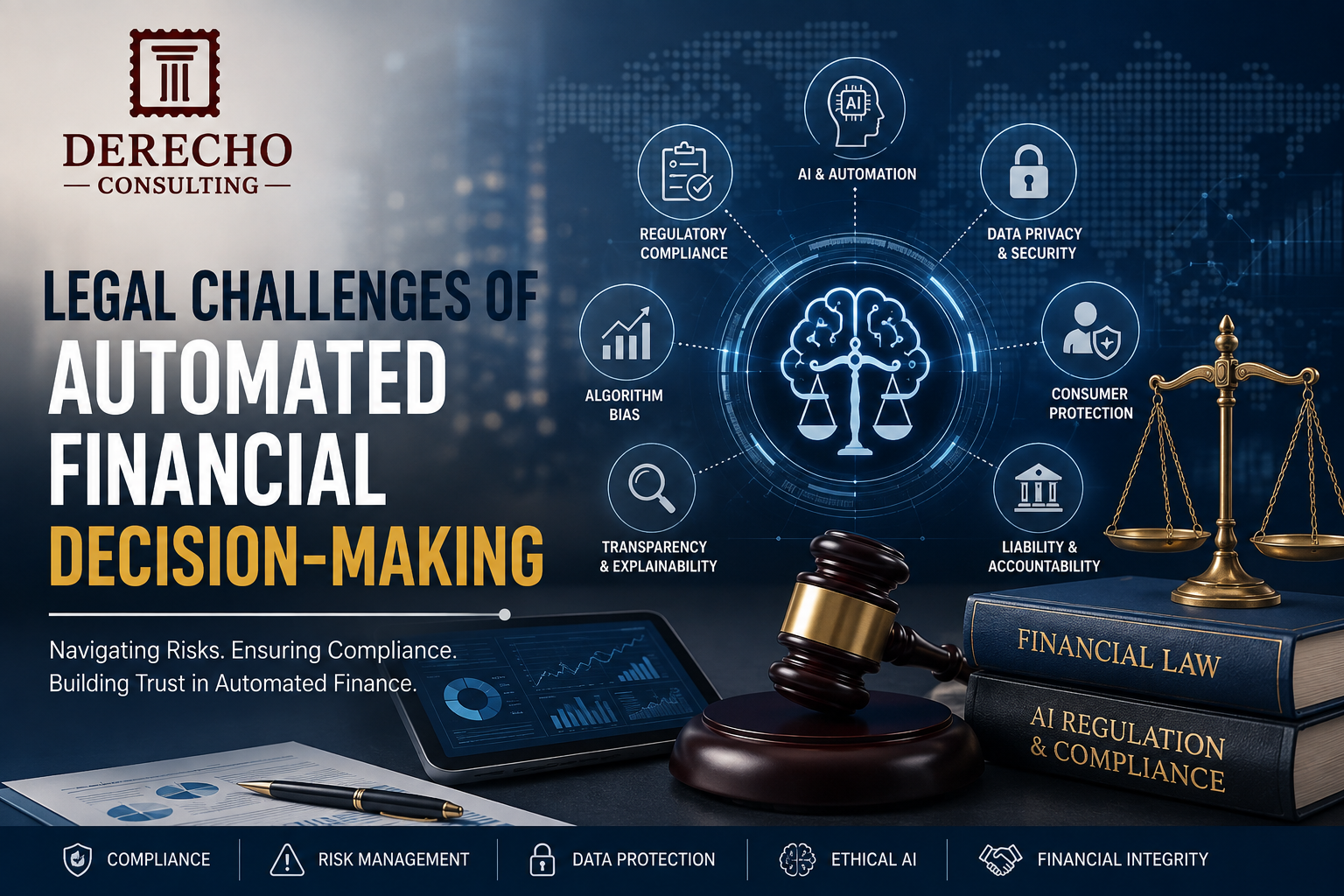
Legal Challenges of Automated Financial Decision-Making are becoming increasingly important as banks, financial institutions, fintech companies, and businesses use artificial intelligence and automated systems to make or support financial decisions. These technologies can improve efficiency, speed up decision-making, and help organizations analyze large amounts of financial information, but they also create new legal, regulatory, and ethical risks.
Automated financial decision-making may be used for credit assessments, fraud detection, loan approvals, investment recommendations, insurance decisions, and customer risk assessments. Businesses must ensure that these systems operate fairly, transparently, securely, and in accordance with applicable laws and regulatory requirements.
This guide explores the legal challenges of automated financial decision-making, including algorithmic bias, data privacy, transparency, consumer protection, accountability, cybersecurity, and regulatory compliance. It also highlights practical measures businesses can take to manage legal risks while responsibly adopting automated financial technologies.
Why Automated Financial Decision-Making Matters
Automated financial systems are changing how organizations evaluate customers, manage financial risks, and deliver financial services. By analyzing large datasets and identifying patterns, automated tools can support faster and more consistent financial decisions.
Automated decision-making can help organizations:
- Improve decision-making efficiency.
- Analyze financial data quickly.
- Detect potential fraud.
- Reduce operational costs.
- Support risk assessment.
- Improve customer service.
- Streamline financial processes.
However, increased automation also requires strong legal oversight and accountability.
Key Legal Challenges
1. Algorithmic Bias and Discrimination
Automated financial systems may produce unfair outcomes if the data used to train or operate them contains biases.
For example, an automated system used for credit assessment could unintentionally disadvantage certain groups of customers.
Businesses should regularly evaluate algorithms, test outcomes, and implement appropriate safeguards to reduce discriminatory results.
2. Data Privacy
Automated financial decisions often rely on large amounts of personal and financial information.
Organizations must carefully consider how customer data is collected, processed, stored, and shared. Appropriate privacy and security measures should be implemented to protect sensitive information.
3. Transparency and Explainability
Customers may want to understand why an automated system made a particular financial decision.
Businesses should maintain clear processes for explaining automated decisions where required and provide appropriate information about the factors influencing those decisions.
Greater transparency can also help organizations build customer confidence and demonstrate responsible technology use.
4. Consumer Protection
Automated financial decisions can directly affect consumers through lending, insurance, investments, and other financial services.
Organizations should ensure that automated systems do not produce misleading, unfair, or harmful outcomes. Appropriate customer support and complaint-handling mechanisms should also remain available.
5. Accountability and Liability
Determining responsibility when an automated system makes an incorrect or harmful decision can be challenging.
Businesses should establish clear accountability frameworks identifying who is responsible for developing, monitoring, reviewing, and correcting automated financial systems.
Human oversight can help organizations identify errors and address high-risk decisions.
6. Cybersecurity Risks
Automated financial systems can contain valuable financial and personal information, making them potential targets for cyberattacks.
Organizations should implement:
- Strong access controls.
- Encryption.
- Security monitoring.
- Regular risk assessments.
- Vulnerability testing.
- Incident response procedures.
- Employee security training.
Strong cybersecurity practices can help protect both customers and financial systems.
Regulatory Compliance
Organizations using automated financial decision-making should monitor applicable financial, technology, privacy, and consumer-protection requirements.
Compliance programs should address:
- Data protection.
- Consumer rights.
- Financial regulations.
- Algorithmic accountability.
- Record keeping.
- Risk management.
- Cybersecurity.
- Regulatory reporting.
Because regulatory expectations surrounding artificial intelligence and automated decision-making continue to evolve, businesses should regularly review their compliance frameworks.
Best Practices for Businesses
Organizations using automated financial decision-making should:
- Establish clear AI governance policies.
- Conduct regular algorithmic risk assessments.
- Test systems for bias and unfair outcomes.
- Protect personal and financial data.
- Maintain human oversight.
- Document important automated decisions.
- Provide appropriate customer support.
- Monitor system performance continuously.
- Conduct regular compliance reviews.
- Update systems as regulations evolve.
A proactive approach can help businesses balance technological innovation with legal responsibility.
Risks of Non-Compliance
Failure to properly manage automated financial decision-making can expose organizations to significant risks.
Potential consequences may include:
- Regulatory penalties.
- Consumer complaints.
- Financial losses.
- Legal disputes.
- Data protection violations.
- Reputational damage.
- Loss of customer trust.
Businesses should therefore identify legal and operational risks before deploying automated financial systems.
How Derecho Consulting Can Help
Derecho Consulting can help organizations address legal and regulatory challenges associated with automated financial decision-making through AI governance, technology law, data privacy, regulatory compliance, risk assessment, and corporate advisory services.
A structured compliance framework can help businesses adopt automated financial technologies while protecting customers, managing legal risks, and supporting responsible innovation.
Conclusion
Legal Challenges of Automated Financial Decision-Making will become increasingly important as artificial intelligence and automation continue to transform the financial sector. While automated systems can improve efficiency and support better financial analysis, they also raise concerns involving fairness, privacy, transparency, accountability, cybersecurity, and consumer protection.
By implementing responsible AI governance, maintaining human oversight, protecting financial data, and regularly reviewing regulatory requirements, businesses can use automated financial decision-making more responsibly while reducing legal and compliance risks.