
Introduction
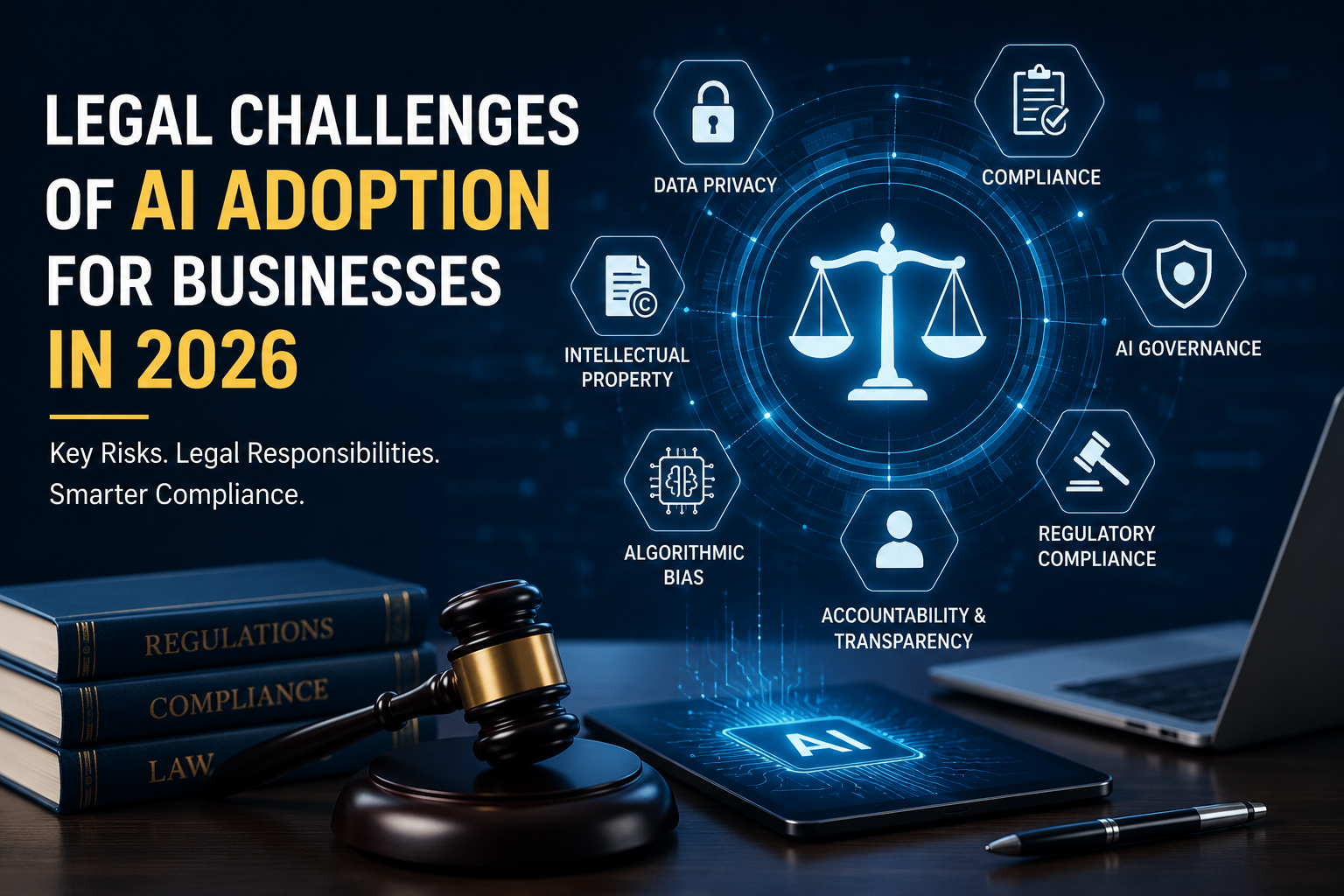
Legal Challenges of AI Adoption for Businesses are becoming one of the biggest concerns for organizations in 2026. As Artificial Intelligence becomes part of daily business operations, companies are using AI to automate workflows, improve customer service, analyze data, and support decision-making. However, adopting AI also introduces new legal responsibilities related to privacy, cybersecurity, intellectual property, transparency, consumer protection, and regulatory compliance.
Governments and regulators across the world continue to develop AI governance frameworks and strengthen oversight of AI systems. Businesses are increasingly expected to implement responsible AI practices, maintain human oversight, protect personal information, and manage AI-related risks throughout the technology lifecycle. Organizations that fail to address these legal challenges may face regulatory investigations, financial penalties, contractual disputes, and reputational damage. Recent developments also show growing expectations for structured AI governance and clearer accountability as AI adoption accelerates.
This guide explains the Legal Challenges of AI Adoption for Businesses in 2026, highlights the most significant legal risks organizations should understand, and provides practical steps to help businesses adopt Artificial Intelligence responsibly while maintaining legal compliance.
Why AI Adoption Legal Challenges Matter
Artificial Intelligence offers significant opportunities for innovation and business growth. However, organizations must ensure that AI systems operate fairly, securely, and transparently while complying with applicable laws and industry standards.
Building a strong AI governance program helps businesses reduce legal risks, improve customer trust, and demonstrate accountability to regulators and stakeholders.
1. Protect Personal Data and Privacy
Many AI systems process customer and employee information. Businesses should ensure personal data is collected, stored, and used in accordance with applicable privacy laws while implementing appropriate security measures.
Strong privacy governance supports both legal compliance and customer confidence.
2. Prevent Bias and Discrimination
AI systems may unintentionally produce biased outcomes if they rely on inaccurate or unbalanced datasets. Businesses should regularly evaluate AI models, monitor automated decisions, and establish human oversight to promote fairness.
Reducing algorithmic bias strengthens compliance and protects business reputation.
3. Protect Intellectual Property Rights
Organizations should understand how AI-generated content, software, designs, and business materials may affect intellectual property ownership. Businesses should also ensure AI tools respect copyright and licensing obligations.
Proper intellectual property management reduces legal uncertainty.
4. Strengthen Cybersecurity and Data Protection
AI systems often manage valuable business information and therefore require strong cybersecurity controls. Businesses should establish security policies, monitor AI systems, and prepare incident response procedures.
Effective cybersecurity supports operational resilience and regulatory compliance.
5. Maintain Transparency and Accountability
Businesses should clearly explain how AI systems are used when automated decisions affect customers, employees, or business partners. Maintaining documentation and governance processes demonstrates responsible AI use.
Transparency builds trust and supports compliance with evolving regulations.
6. Monitor AI Regulations
AI laws and regulatory guidance continue to evolve globally. Businesses should regularly review legislative developments, update compliance programs, and assess whether their AI systems meet current legal expectations.
Keeping pace with regulatory changes helps organizations reduce compliance risks.
7. Build an AI Governance Framework
Every organization using Artificial Intelligence should establish internal governance policies covering AI development, deployment, monitoring, security, documentation, and risk management.
A structured governance framework supports responsible innovation and long-term compliance.
Best Practices for AI Adoption Legal Challenges
Businesses should conduct AI risk assessments, review vendor agreements, strengthen cybersecurity, document AI decision-making processes, provide employee training, and regularly audit AI systems.
A proactive approach helps organizations balance innovation with legal compliance.
Conclusion
Understanding the Legal Challenges of AI Adoption for Businesses in 2026 is essential for organizations implementing Artificial Intelligence. Businesses that strengthen AI governance, protect personal data, reduce algorithmic bias, improve cybersecurity, and monitor evolving regulations will be better positioned to innovate responsibly while maintaining compliance.
By proactively addressing AI-related legal challenges, organizations can reduce regulatory risks, build stakeholder trust, and confidently integrate Artificial Intelligence into their long-term business strategy.