
Introduction
Staying compliant has become one of the biggest responsibilities for businesses operating in the United States. In 2026, companies must navigate a growing number of federal, state, and local regulations covering taxation, employment, corporate governance, data privacy, and financial reporting. Whether you operate a startup, a small business, or a large corporation, maintaining compliance is essential to avoid penalties, protect your business reputation, and support long-term growth.
A proactive approach to compliance helps organizations identify potential legal risks before they become costly problems. Businesses that regularly review their legal obligations are better prepared for regulatory changes, audits, and reporting requirements. From maintaining good standing with the Secretary of State to meeting tax obligations and employment law requirements, every business should have a structured compliance process in place.
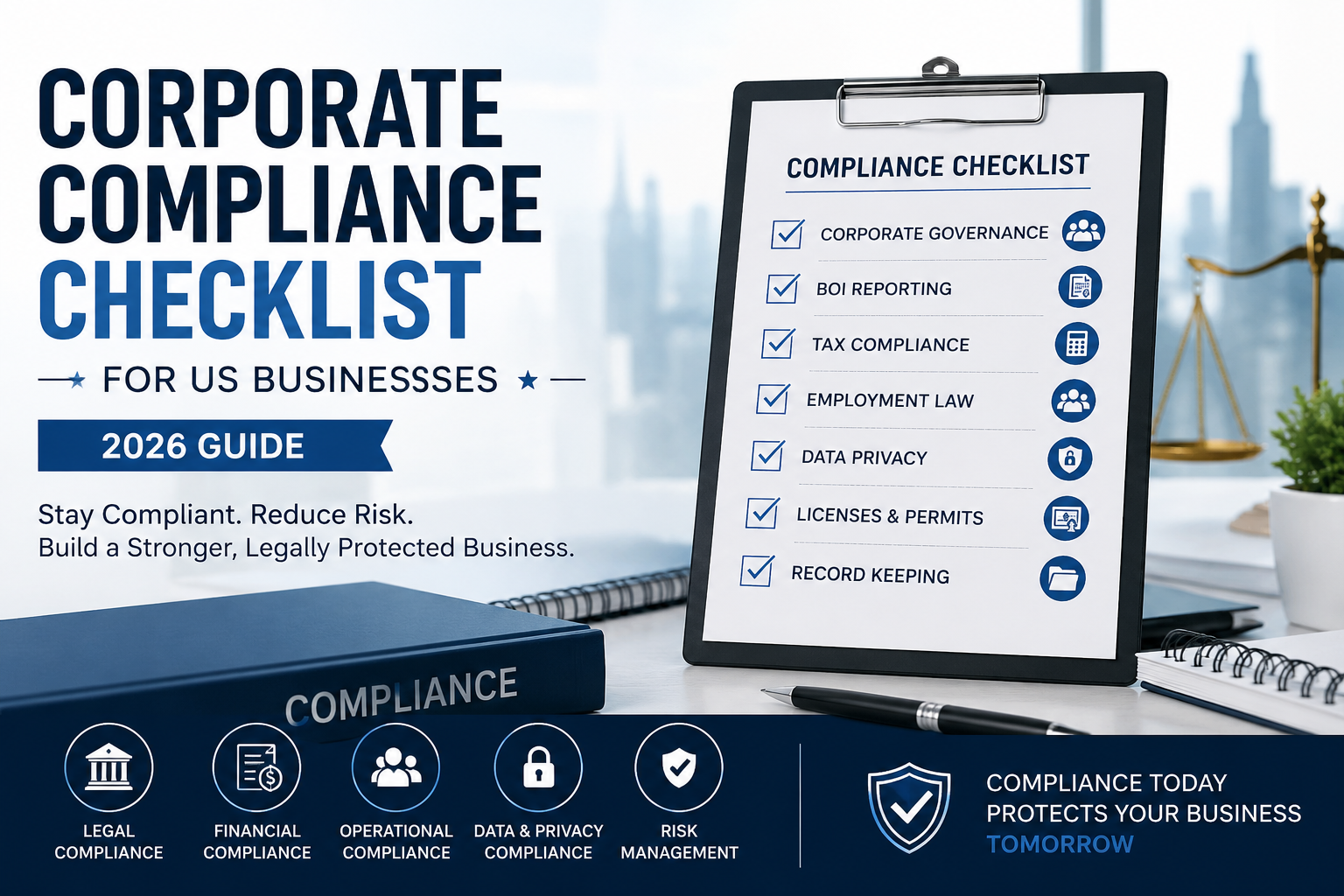
This Corporate Compliance Checklist for US Businesses provides a practical overview of the key legal and regulatory responsibilities businesses should review throughout 2026. It covers corporate filings, Beneficial Ownership Information (BOI) reporting, tax compliance, employment regulations, data privacy requirements, business licenses, and corporate governance practices to help organizations remain compliant in an increasingly complex regulatory environment.
Why Corporate Compliance Matters in 2026
Business regulations continue to evolve every year, and 2026 introduces several important compliance obligations that companies cannot afford to overlook. Federal reporting requirements, new state privacy laws, changing employment regulations, and updated tax obligations are reshaping the compliance landscape for businesses across the United States.
Companies operating in multiple states face additional challenges because legal requirements often vary between jurisdictions. Remote work arrangements, expanding digital operations, and cross-border business activities also increase compliance responsibilities. Establishing a comprehensive compliance program helps businesses reduce legal risks while improving operational efficiency and corporate governance.
1. Maintain Good Standing with State Authorities
Every business should regularly confirm that it remains in good standing with the Secretary of State.
Review annual reports, franchise tax payments, registered agent information, and corporate filings regularly. Keeping these records updated protects your business from unnecessary legal issues.
Maintaining good standing protects the legal status of a business and supports contracts, financing opportunities, and commercial operations.
2. Review Beneficial Ownership Information (BOI) Reporting
Businesses should determine whether they are required to submit Beneficial Ownership Information (BOI) reports under applicable federal reporting requirements. Organizations should maintain accurate ownership records, update changes promptly, and retain supporting documentation for future reference.
Proper BOI reporting reduces regulatory risks and supports corporate transparency.
3. Review Tax Compliance Requirements
Tax compliance should remain a priority throughout the year. Businesses should verify sales tax registrations, payroll tax obligations, franchise tax filings, and corporate tax reporting requirements in every state where they conduct business.
Companies operating across multiple states should also monitor changing economic nexus rules and jurisdiction-specific tax obligations.
4. Review Employment Law Compliance
Employment regulations continue to change across the United States. Employers should review wage requirements, employee classifications, leave policies, workplace notices, hiring documentation, and employee handbooks to ensure compliance with federal, state, and local employment laws.
Regular policy reviews help reduce legal exposure and support effective workforce management.
5. Strengthen Data Privacy and Cybersecurity Compliance
As data privacy laws continue expanding across the United States, businesses should regularly review their privacy policies, customer data practices, vendor agreements, and cybersecurity procedures.
Organizations should establish appropriate safeguards for protecting personal information while ensuring compliance with applicable state privacy regulations.
6. Maintain Corporate Governance Records
Proper corporate governance requires businesses to maintain accurate organizational records, board resolutions, operating agreements, financial statements, and meeting minutes.
Well-maintained corporate records support regulatory compliance, legal protection, and sound business decision-making.
7. Verify Business Licenses and Regulatory Requirements
Businesses should review all federal, state, and local licenses, permits, registrations, and industry-specific certifications to ensure they remain current throughout the year.
Timely renewals help avoid unnecessary business interruptions and regulatory penalties.
8. Establish an Ongoing Compliance Program
Corporate compliance should not be treated as a one-time annual activity. Businesses should implement regular compliance reviews, maintain filing calendars, monitor legal developments, and conduct periodic internal audits.
A structured compliance program helps organizations respond more effectively to changing regulations while reducing operational and legal risks.
Conclusion
Corporate compliance remains a critical component of successful business operations in 2026. Organizations that actively monitor legal developments, maintain accurate records, review employment policies, manage tax obligations, and strengthen governance practices are better positioned to achieve sustainable growth while minimizing regulatory risks.
By following a comprehensive Corporate Compliance Checklist for US Businesses, companies can improve legal compliance, protect their operations, and build greater confidence among regulators, investors, employees, and customers.