
Introduction
Investment Tax Credit (ITC) remains one of the most valuable federal incentives for renewable energy developers. As the July 2026 deadline approaches, wind and solar projects must understand the latest eligibility rules, compliance requirements, and construction deadlines to qualify for federal clean energy tax incentives.
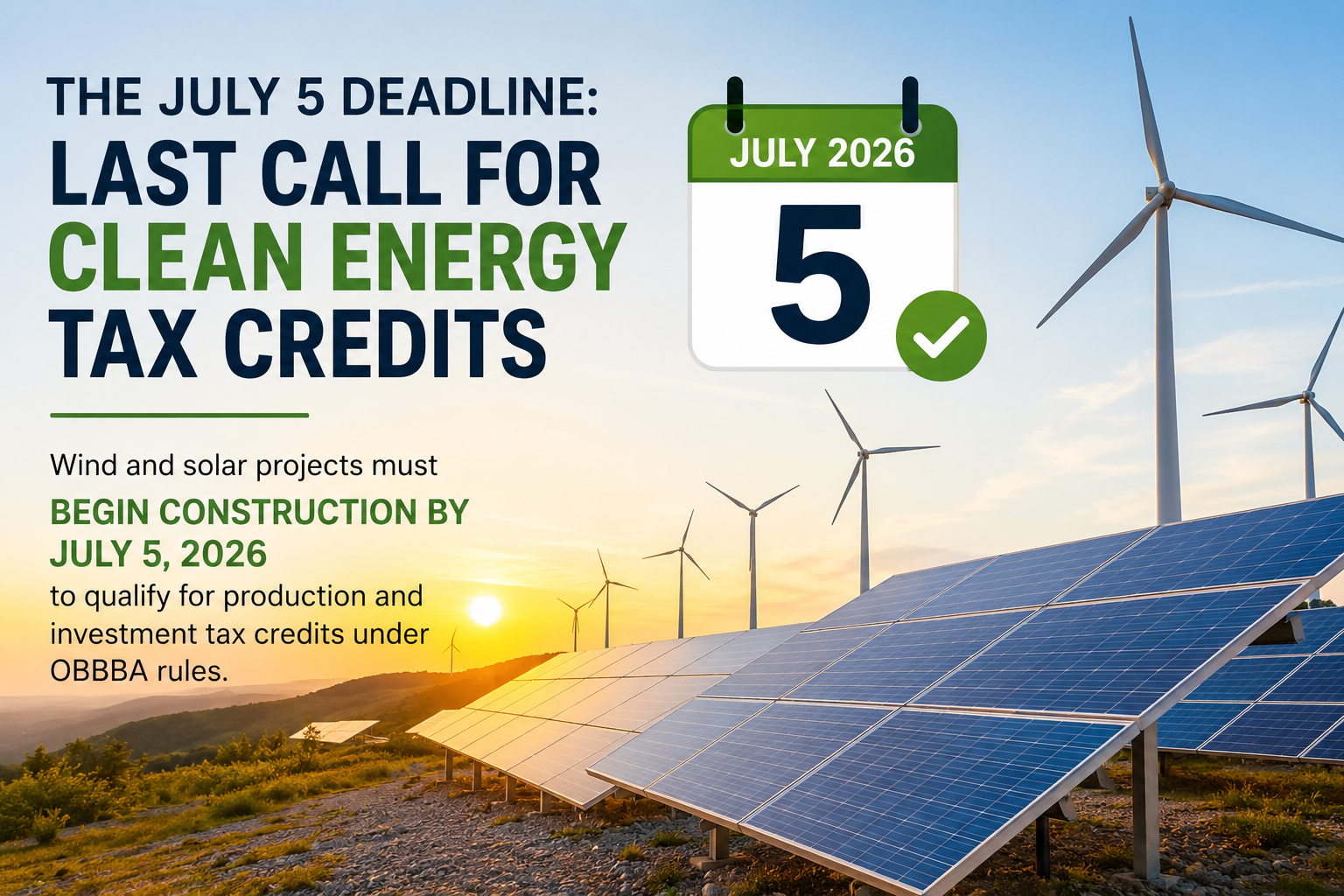
The renewable energy sector is approaching one of its most significant compliance milestones in recent years. For wind and solar developers, the July 5, 2026 deadline represents a critical point that could determine whether a project qualifies for valuable federal clean energy tax incentives. These incentives have played an essential role in supporting renewable energy investments, improving project feasibility, and accelerating the transition toward cleaner energy sources.
Recent legislative changes under the One Big Beautiful Bill Act (OBBBA) have introduced new eligibility requirements for the Production Tax Credit (PTC) and Investment Tax Credit (ITC). Developers must now carefully evaluate construction timelines, project documentation, and compliance obligations to ensure their projects remain eligible for these federal incentives. Missing the applicable construction deadline may significantly affect project economics and financing opportunities.
Understanding what qualifies as the beginning of construction has become increasingly important. Developers must also consider evolving IRS guidance, documentation requirements, continuity rules, and other regulatory obligations that may influence tax credit eligibility. Proper planning and compliance are now just as important as engineering and project execution.
Why the July 5 Deadline Matters
The July 5 deadline is more than a calendar milestone—it is a key compliance requirement for renewable energy developers. Projects that begin construction within the required timeframe may continue to qualify for important federal tax incentives, while projects that miss the deadline could face stricter eligibility requirements and accelerated completion timelines.
For large-scale wind farms and utility-scale solar installations, construction schedules often extend over several years. As a result, establishing the official construction start date is a critical legal and financial consideration rather than a simple administrative step.
Construction Requirements Continue to Evolve
Federal guidance has traditionally provided different methods for demonstrating that construction has officially begun. These requirements have continued to evolve through legislative updates, IRS guidance, and ongoing legal developments. Developers should ensure they understand the current standards before relying on any particular compliance strategy.
Maintaining detailed documentation—including construction records, supplier agreements, invoices, photographs, engineering reports, and contractor certifications—can help support future tax credit claims during regulatory reviews or audits.
Compliance Planning Is More Important Than Ever
In addition to construction requirements, developers should also review supply chain obligations, foreign sourcing restrictions, financing structures, and continuity requirements that may affect overall project eligibility. Regulatory compliance is no longer limited to a single filing or deadline; it requires continuous planning throughout the life of a project.
Working closely with experienced legal and tax advisors can help organizations identify potential risks early, reduce compliance uncertainty, and strengthen documentation before important deadlines arrive.
Key Considerations for Renewable Energy Developers
As the deadline approaches, developers should evaluate whether their projects are progressing according to schedule, review all supporting documentation, confirm compliance with applicable federal requirements, and assess whether project financing remains aligned with current tax credit rules. Early planning can help reduce delays and improve long-term project certainty.
Conclusion
The July 5, 2026 clean energy tax credit deadline represents an important milestone for the renewable energy industry. As regulatory requirements continue to evolve, developers should take a proactive approach to construction planning, documentation, and legal compliance to maximize eligibility for available federal tax incentives.
Organizations involved in wind and solar development should regularly monitor legislative updates, review project timelines, and seek professional legal and tax guidance where appropriate. Careful preparation today can help protect valuable tax benefits while supporting successful project delivery in an increasingly complex regulatory environment.