
Introduction
Employment law in the United States continues to evolve, and 2026 brings several important legal changes that employers should not overlook. Businesses operating across multiple states now face new compliance requirements related to noncompete agreements, pay transparency laws, and paid family and medical leave programs. Even employers with operations in a single state may be affected if they hire remote employees or recruit talent across state lines.
The days of using one standard employee handbook for every location are coming to an end. State legislatures continue to introduce new employment laws, making it essential for employers to review workplace policies regularly. Businesses that fail to keep pace with these legal developments may face compliance risks, financial penalties, and costly legal disputes.
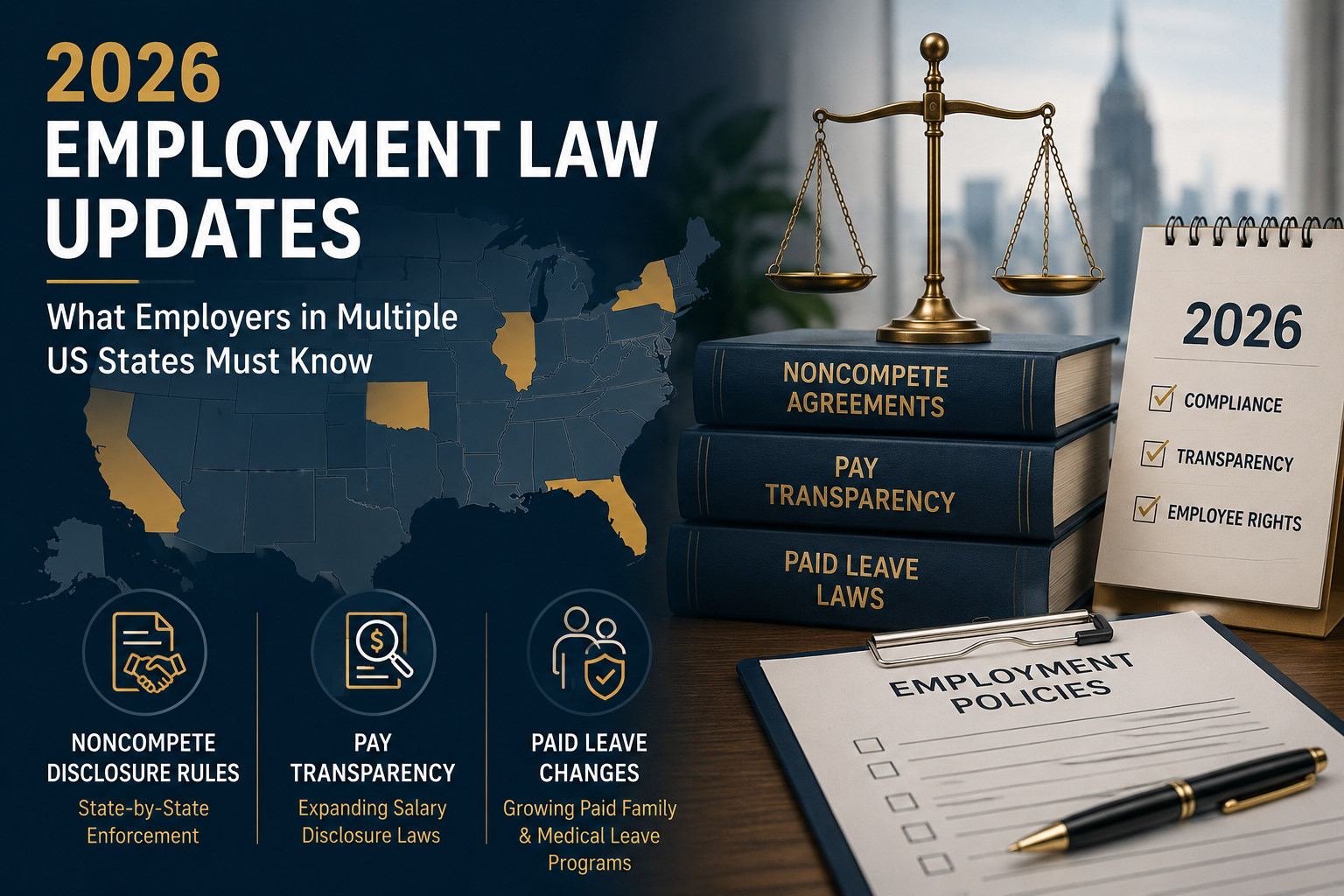
This article highlights the most significant employment law updates for 2026. It explains how changing noncompete rules, expanding pay transparency requirements, and evolving paid leave programs affect employers while providing practical compliance considerations for businesses operating across multiple jurisdictions.
State-by-State Enforcement of Noncompete Disclosure Rules
Noncompete Agreements Continue to Face Stricter Regulations
Noncompete agreements have become one of the most closely monitored areas of employment law. While several states continue to prohibit or restrict these agreements, others are introducing stricter enforcement standards or limiting their use based on employee income levels and occupations.
States including California, North Dakota, Minnesota, and Oklahoma already prohibit most noncompete agreements. Washington has also introduced legislation that significantly limits the enforceability of both existing and future agreements.
As employment laws continue to differ from one state to another, employers should avoid relying on outdated employment contracts. Regular legal reviews help ensure agreements remain compliant with current state requirements.
Different States Continue to Follow Different Approaches
Although many states are limiting noncompete agreements, others are adopting more targeted regulations. Some laws apply only to employees below specific income thresholds, while others focus on certain professions, including healthcare workers.
These differences make it increasingly difficult for employers operating across multiple states to rely on one standard agreement. Instead, businesses should carefully review each state’s legal requirements before implementing or enforcing restrictive employment agreements.
Florida Continues to Take a Different Approach
Unlike several other states, Florida continues to support stronger employer protections through legislation such as the CHOICE Act. Rather than limiting noncompete agreements, Florida strengthens their enforceability for certain highly compensated employees.
This demonstrates that employment law trends are not consistent across the United States. Employers should avoid assuming that one state’s legal approach applies nationwide.
Regular Compliance Reviews Are Essential
Employment agreements should no longer be treated as documents that remain unchanged for years. Employers should regularly review noncompete clauses, disclosure obligations, notice requirements, and compensation thresholds to ensure ongoing compliance with changing state laws.
Routine legal reviews reduce compliance risks, minimise disputes, and help businesses respond proactively to legislative changes.
Pay Transparency Laws Continue to Expand
Pay Transparency Requirements Are Increasing
Pay transparency has become one of the fastest-growing areas of employment law. More states now require employers to disclose salary ranges in job advertisements or during the recruitment process.
States such as California, Colorado, Illinois, New York, Washington, and Minnesota already require salary disclosures in many job postings, while additional states continue introducing similar legislation.
Remote Hiring Creates New Compliance Challenges
The rise of remote work has made compliance more complex. Employers located outside a particular state may still need to comply with that state’s pay transparency laws if remote positions are available to applicants residing there.
As a result, many businesses are adopting nationwide recruitment policies that meet the strictest state requirements to simplify compliance.
Enforcement Is Becoming More Active
State regulators continue strengthening enforcement efforts by introducing stricter penalties for non-compliance. Employers should ensure salary ranges are accurate, clearly defined, and consistently included in job postings instead of relying on vague compensation estimates.
Paid Family and Medical Leave Continues to Expand
Paid family and medical leave remains one of the fastest-changing areas of employment law.
Most U.S. states now operate some form of paid family and medical leave program, with many funded through payroll contributions. Several states also allow employers to offer approved private leave plans that meet state requirements.
As more jurisdictions introduce or expand paid leave programs, employers should regularly review leave policies, payroll systems, employee handbooks, and internal procedures to maintain compliance.
Conclusion
Employment law across the United States continues to change rapidly. New developments involving noncompete agreements, pay transparency requirements, and paid family and medical leave programs create additional compliance responsibilities for employers operating across multiple states.
Businesses should regularly review employment agreements, hiring practices, compensation policies, payroll procedures, and employee handbooks to ensure they remain aligned with current state laws. Taking a proactive approach to compliance helps reduce legal risks, avoid costly penalties, and strengthen workplace governance.
As employment legislation continues to evolve throughout 2026 and beyond, staying informed and obtaining timely legal guidance will remain essential for businesses managing employees across multiple jurisdictions.